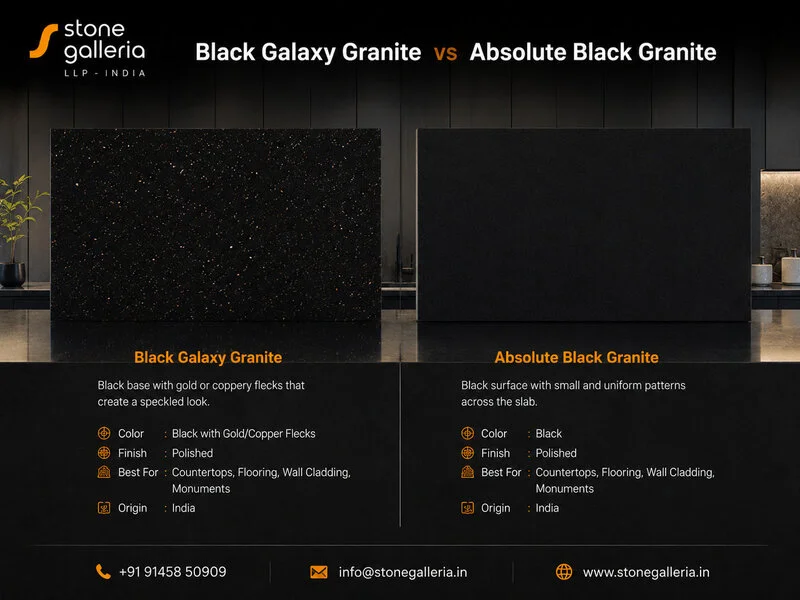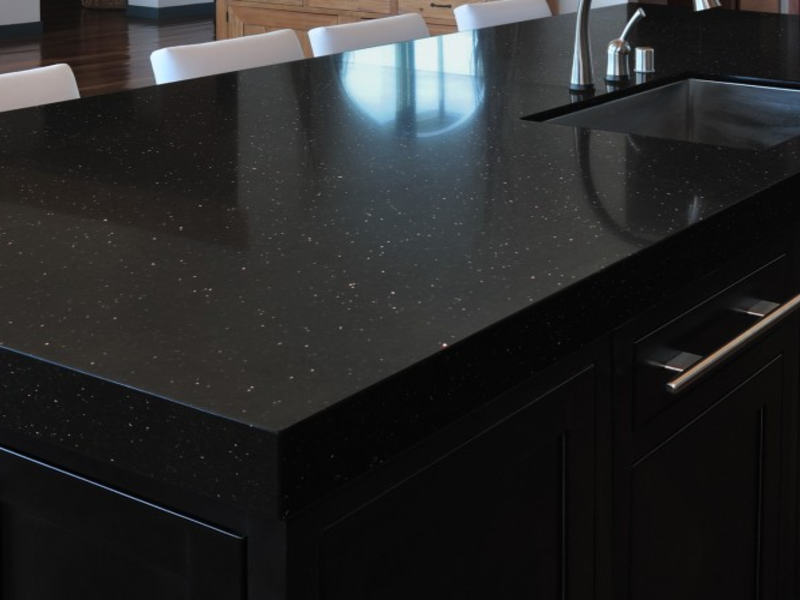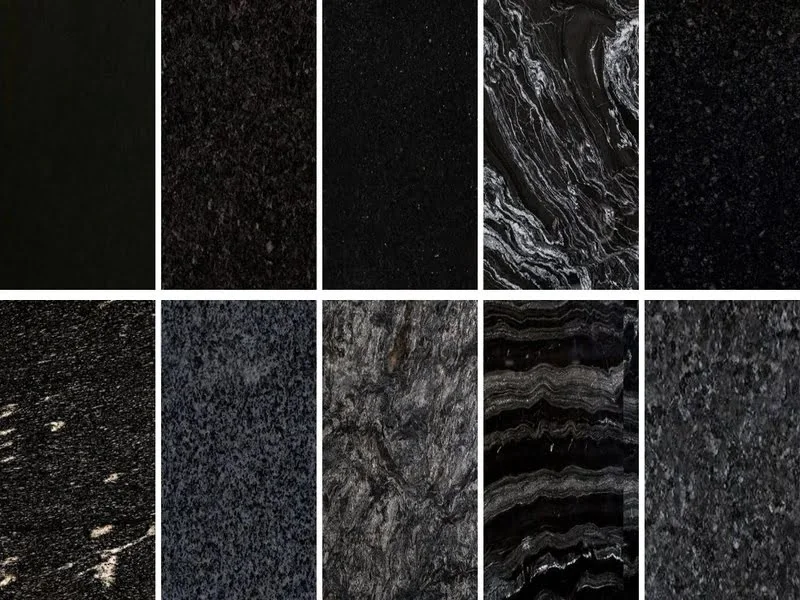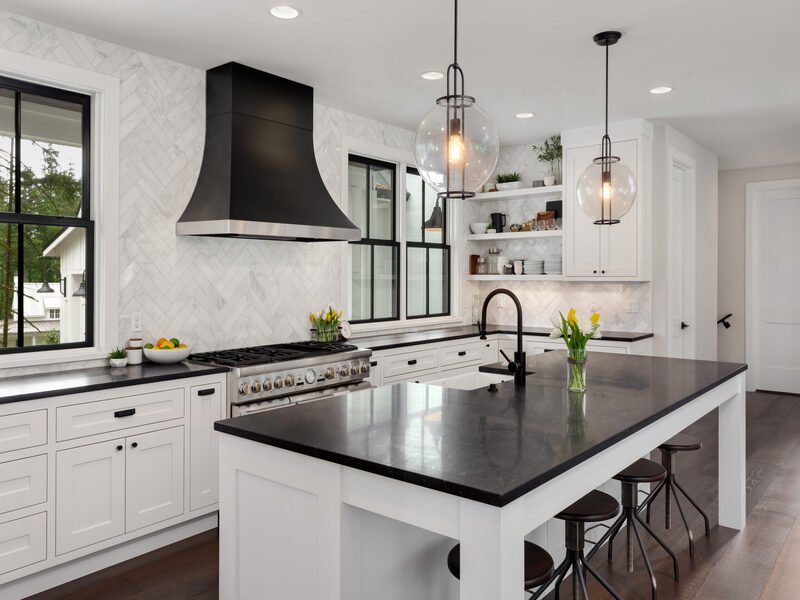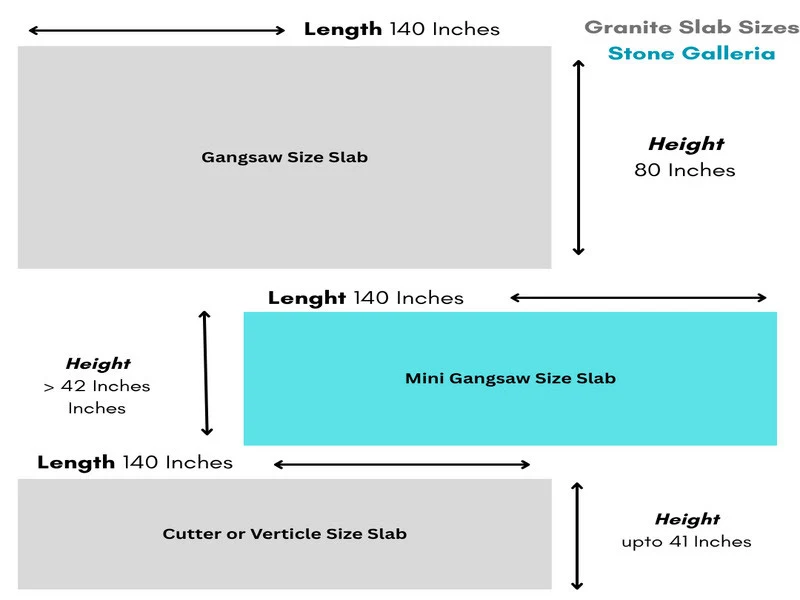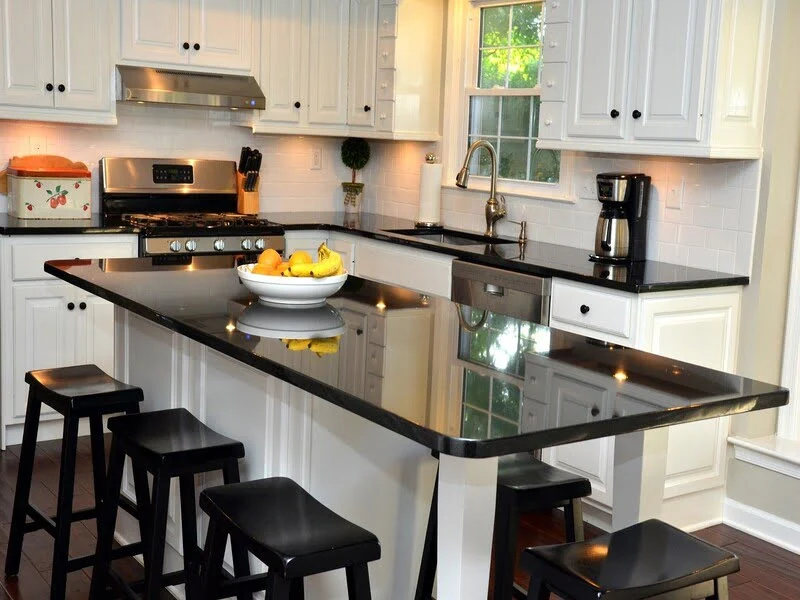
A Black Galaxy granite backsplash already has something many dark stones do not: its own natural points of light. Against the deep black background, bronze-to-gold mineral flecks become more noticeable as light moves across the polished surface.
Adding glass mosaic can build on that effect beautifully. But because glass also reflects light, the combination can become unnecessarily busy if both materials are trying to command equal attention.
The most successful approach is usually to let Black Galaxy remain the visual anchor and use glass mosaic for a specific purpose: to repeat the warmth of the stone's metallic flecks, introduce contrast, connect the backsplash with cabinetry or hardware, or create one controlled focal point behind the range.
That means the real question is not simply whether Black Galaxy and glass mosaic look good together. They can!
With a kitchen backsplash tile that already has this much natural character, the more useful question is: How do you combine them without losing what makes Black Galaxy distinctive in the first place?
Why Does Black Galaxy Work So Well with Glass Mosaic?
The relationship begins with the stone itself.
Black Galaxy is commercially sold as granite and is associated with the Chimakurthy quarry belt in Andhra Pradesh, India. Geological studies of the deposit describe the material more specifically as a bronzite-bearing gabbro-norite or gabbronorite. Bronzite contributes much of the metallic bronze-gold lustre that gives the stone its familiar galaxy-like appearance.
For backsplash design, that distinction is useful because the sparkle is not a printed pattern or surface decoration. It comes from minerals within the stone.
Glass can complement that natural reflectivity without trying to reproduce it exactly.
A restrained bronze or champagne glass can pick up the warmer mineral tones. Frosted or pale glass can provide relief against the black background. Smoke or charcoal can create a more tonal contemporary look.
The better starting point is therefore not:
Which glass matches Black Galaxy?
It is:
What should the glass contribute that the stone does not already provide?
Should Black Galaxy or the Glass Mosaic Be the Main Feature?
Polished Black Galaxy is already a strong visual material. Giving an equally bold mosaic the same amount of attention can make the backsplash feel overdesigned.
In most kitchens, one material should lead.
| Approach | Best use | Main consideration |
| Black Galaxy with a narrow mosaic accent | Long backsplash runs | Keeps the stone dominant |
| Black Galaxy with mosaic behind the range | Cooking wall or focal zone | Adds interest without breaking the entire backsplash |
| Glass field with Black Galaxy borders or inserts | Glass-led designs | Reduces the visual continuity of the stone |
If Black Galaxy was chosen specifically for its dark background and metallic flecks, the first two approaches usually make more sense.
A useful rule is: Accent the stone rather than imitate it.
A glass mosaic containing black, bright gold, copper, mirror finishes and strong iridescence may contain all the colours associated with Black Galaxy, but it can easily compete with the stone.
Often, the more convincing pairing is a quieter one.
The glass only needs to pick up one characteristic of the granite—its warmth, darkness, reflective quality or connection with another finish in the kitchen.
Which Glass Colours Work Best with Black Galaxy?
There is no universal “best” colour because the rest of the kitchen matters.
- Bronze, Champagne and Warm Metallic Glass
This creates the most direct connection with Black Galaxy's bronze-gold flecks.
Muted bronze, champagne and smoky metallic mosaics can work particularly well with brass hardware, warm timber cabinetry, cream surfaces or warm-white interiors.
The important part is restraint.
The metallic flecks in Black Galaxy are scattered through the stone rather than forming a solid gold surface. A very bright yellow-gold mosaic can therefore look much louder than the granite it is intended to complement.
- Clear, Frosted or Pale Glass
Lighter glass works when the backsplash needs contrast rather than another dark element.
Start with the stone’s background colour and fleck pattern, then choose your mosaic around it. View Black Galaxy granite to see the material discussed in this guide.
Explore Black Galaxy GraniteIt can be especially effective with white, ivory, pale-grey or light-timber cabinetry because it prevents the wall from becoming one uninterrupted black field.
Grout matters here. A pale mosaic with dark grout becomes strongly patterned, while a grout closer to the glass colour produces a much calmer effect.
- Smoke, Charcoal and Black Glass
Dark glass creates a sophisticated tonal combination, but it needs enough contrast elsewhere in the kitchen.
Black Galaxy, black glass, dark grout and dark cabinetry can merge into one heavy surface unless lighting, lighter worktops or metal details create separation.
- Coloured Glass
Blue, green or another colour can work, but it should usually connect to something else in the room.
For example, a muted green mosaic may make sense if it relates to cabinetry or pendant lighting. A completely unrelated colour used only because it contrasts with black is more likely to feel disconnected.
The glass should help connect the backsplash to the kitchen, not introduce a separate design story.
How Much Mosaic Should You Use?
There is no useful rule saying a Black Galaxy backsplash needs a particular percentage of glass.
Use the mosaic to define an area, such as
- highlight the cooking area;
- form a narrow horizontal detail;
- sit beneath open shelving;
- create a vertical feature below a hood;
- or connect the backsplash with another finish used elsewhere.
If mosaic is added wherever there happens to be space, it stops functioning as an accent.
This matters especially with Black Galaxy because the stone already contains its own natural pattern.
Behind the range is one of the easiest places to introduce mosaic because the cooking area is already a focal point. But even there, avoid adding too many decorative layers.
A strongly patterned glass mosaic surrounded by a thick contrasting border and heavily flecked Black Galaxy can create three competing visual elements.
Often the cleaner transition is simply:
Black Galaxy → glass mosaic → Black Galaxy
without another decorative frame.
Does Mosaic Size Matter?
Yes, because mosaic size changes how busy the backsplash feels.
Smaller pieces create:
- more grout lines;
- more individual reflections;
- and more visual movement.
Larger glass pieces create fewer joints and a calmer surface.
That becomes important beside Black Galaxy because the stone itself contains many small metallic points.
If the selected slabs have large or prominent flecks, an extremely small and highly reflective mosaic can introduce too much fine detail.
If the granite has finer, quieter flecking, the glass can usually carry slightly more texture.
There is no single correct mosaic size. The scale should respond to the actual pattern of the stone.
Why Should You See the Actual Black Galaxy Before Choosing the Glass?
Black Galaxy is recognisable, but it is not completely uniform.
- Natural variation can affect:
- background colour depth;
- size of the bronze-gold flecks;
- fleck distribution;
- visible natural lines or waterlines;
- and overall consistency.
These differences become particularly noticeable on a backsplash because the surface sits vertically and relatively close to eye level.
A small showroom sample may contain fine gold flecks, while the supplied slabs may show larger bronze particles or more visible natural lines. A glass selected against the sample may therefore behave differently beside the finished stone.
Before ordering the mosaic, inspect the actual Black Galaxy slabs, batch photographs or detailed video under lighting that resembles the kitchen.
Look particularly at whether the flecks appear:
- warm gold;
- bronze;
- copper-toned;
- or relatively subtle.
Then choose the glass.
This sequence is much more reliable than choosing the decorative mosaic first and trying to make the stone fit around it.
How Do Finish and Lighting Change the Combination?
Polished Black Galaxy is the most common finish because polishing makes Black Galaxy’s metallic mineral flecks more noticeable.
Paired with glossy glass, it creates a highly reflective backsplash.
That can look striking, particularly in a contemporary kitchen with well-planned under-cabinet lighting. But it can also create too many highlights if the cabinetry, hardware and surrounding finishes are reflective as well.
If you’re still deciding on the stone, compare Black Galaxy with other black granites. Look at their patterns and finishes alongside your cabinetry, worktop and glass samples.
Compare Black Granite OptionsA polished Black Galaxy backsplash with frosted, satin or softly textured glass often produces more balance because the granite remains the dominant reflective surface.
Lighting should therefore be considered before the final material approval, not after installation.
Under-cabinet LEDs can intensify both the stone's metallic flecks and individual reflections from the glass.
Place the samples vertically and view them under lighting similar to the finished kitchen. Check for:
- excessive glare;
- distracting reflections;
- overly strong grout lines;
- visible backing through transparent glass;
- and whether the mosaic overwhelms the stone.
A sample viewed flat on a showroom desk cannot show these effects accurately.
What Needs to Be Planned Before Installing Granite and Glass Together?
A successful sample combination can still fail on the wall if the two materials have not been considered as one installation system.
Three details deserve particular attention.
Glass Backing and Mortar
Glass mosaic may be transparent, translucent, opaque, mesh-mounted or backed with a coating.
Transparent and translucent pieces can reveal the setting material behind them. For this reason, glass-tile installation guidance commonly specifies white mortar and full, even coverage so dark adhesive, voids or trowel ridges do not remain visible through the finished surface.
The exact mortar should be confirmed with the glass manufacturer because different backing systems can have different requirements.
Material Thickness
The granite and mosaic may not be the same thickness.
If that difference is ignored, one material can sit noticeably higher than the other, creating an uneven meeting edge or an improvised slope of grout.
Before installation, place an actual granite piece beside an actual mosaic sheet and compare the finished build-up.
Any adjustment should be planned through the substrate or another approved installation method rather than solved by simply applying excessive adhesive behind the thinner material.
Meeting Edges and Grout
Where Black Galaxy and glass meet, decide in advance how the edge will be finished.
Depending on the materials, this may involve:
- a clean finished stone edge;
- a finished glass edge;
- a narrow joint;
- or a metal profile.
Transparent glass deserves particular attention because unfinished backing can remain visible at an exposed edge.
Grout also has a major visual effect, especially with small mosaics.
A grout colour close to the glass allows the mosaic to read more like one continuous surface. Contrasting grout outlines every individual piece and makes the glass much more graphic.
If Black Galaxy is meant to remain visually dominant, a quieter grout treatment is usually easier to control.
For transparent or translucent mosaics, make a sample using the actual mortar and grout before approving the final colour.
Also confirm that the grout is suitable for the specific glass mosaic, since some glass surfaces can be scratched by inappropriate or overly abrasive grout aggregates.
At the countertop-to-backsplash junction, use the appropriate flexible transition detail rather than treating the change of plane as an ordinary rigid grout joint.
Common Mistakes to Avoid
- Choosing the Mosaic Before Seeing the Stone: The actual Black Galaxy batch may contain different fleck sizes, colour tones or natural lines than the showroom sample.
- Matching Every Gold Fleck: Glass does not need to reproduce the stone exactly. Too much black-and-gold repetition can make the backsplash feel themed rather than naturally coordinated.
- Using Too Many Reflective Materials: Polished Black Galaxy, mirror glass, glossy cabinetry, polished hardware and bright lighting can quickly create visual overload.
- Ignoring Thickness and Glass Backing: These details may not appear on a mood board, but they can determine whether the finished granite and glass sit cleanly together.
- Using Mosaic Without a Clear Purpose: The best accents highlight a feature. Random decorative strips rarely improve a backsplash simply because space is available.
What Should You Check Before Ordering?
For the Black Galaxy, inspect the actual slab or batch for:
- background depth;
- fleck size and distribution;
- natural lines;
- finish;
- and thickness.
Also confirm the supplier's care and sealing recommendations for the specific stone and finish being supplied, rather than assuming that every Black Galaxy installation requires exactly the same maintenance routine.
For the glass mosaic, confirm:
- whether it is transparent, translucent or opaque;
- how it is mounted;
- which setting material is approved;
- whether white mortar is recommended;
- its actual thickness;
- suitable grout;
- and how exposed edges should be finished.
These questions tell you far more about whether the materials will work together than simply asking whether the colours “match.”
Conclusion
Black Galaxy granite and glass mosaic work best when they are given different jobs.
Let the Black Galaxy provide the depth, dark foundation and natural metallic movement. Use the glass to add something more specific—contrast, warmth, light or one intentional focal point.
Choose the mosaic against the actual stone, test both materials under realistic lighting, and resolve mortar, thickness and grout before installation.
If done well, the glass does not compete with Black Galaxy. It makes the stone more noticeable.