You saw a floor or a wall so white it looked like snow, and you have been trying to find out what it is. You searched for pure white marble, snow white flooring, absolute white cladding. You looked at Corian and quartz and ruled them out, because they had no depth and no crystal. Someone told you it was imported white marble.
It is most likely Vietnam White marble, quarried in northern Vietnam and processed largely in Kishangarh - India.
This page covers what it is made of, what it weighs, what it costs, where it works, and where it fails. It also covers how to check that what you are being sold is actually from Vietnam, because several different stones are sold under the same name.
What is Vietnam White Marble?
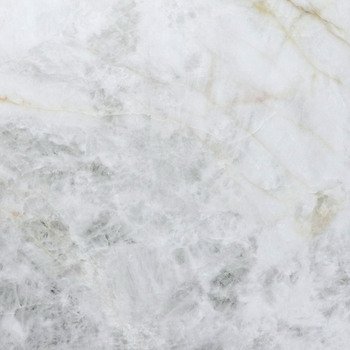
A bright, almost pure-white natural stone with a clean, milky or ivory transparent appearance. When polished, it has a smooth, glossy surface and may show tiny sparkling or clear crystals. The crystals can sometimes look like sugar grains or crushed ice within the stone.
Vietnam white marble commonly contains about 95%–99% calcite, with calcite providing a naturally white base. Depending on the quarry, it may be plain white or have soft grey, beige, golden, black, green or cloudy veining. Veined Vietnamese material is sold in India as Lasa White. Lasa is an Italian marble from South Tyrol; the two are unrelated.
However, appearance alone cannot prove that it is Vietnamese marble, because visually similar white marbles are quarried in many countries.
Vietnam white marble is popular because it combines a luxurious appearance, good performance, wide usability, and competitive pricing. It provides a high-end white-marble appearance at a lower price than many comparable European stones like carrara, calacatta, statuario.
It’s often compare to other white marbles like Indian white marbles such as Ambaji, Banswara, Morwad, Agaria and Makrana. Other varieties such as Sivec marble from Macedonia, Thassos marble from Greece and white marble from Namibia (Africa).
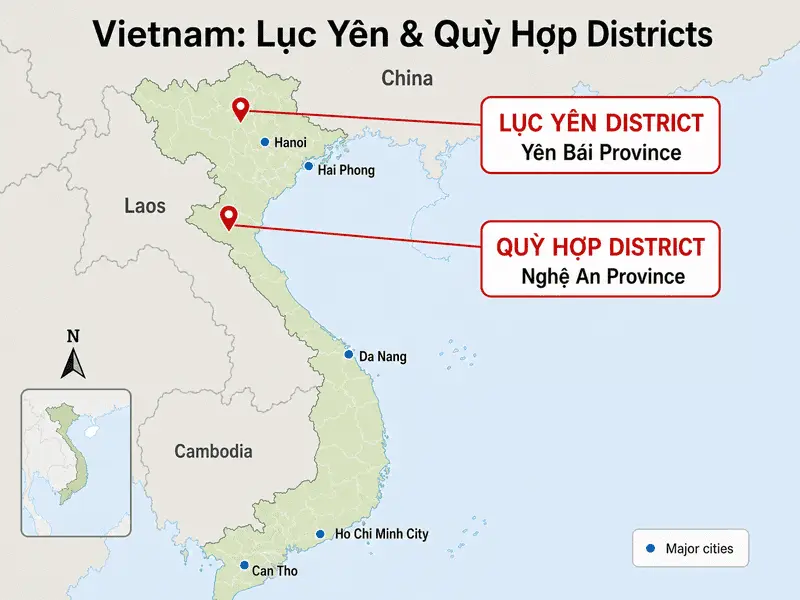
Where is Vietnam White marble quarried?
Vietnam white marble mainly quarried or mined in northern Vietnam, especially:
- Luc Yen district, Yen Bai Province — North of Hanoi - the best-known source.
- Quy Hop district, Nghe An Province - South of Hanoi — another major producing area.
- Additional deposits occur in Thanh Hoa and other northern regions.
Vietnam white marble is sold internationally under several names, which can vary by quarry, exporter, factory, its visual characteristics and market:
- White Vietnam
- Vietnam Crystal White
- Crystal White
- Vietnamese Crystal White
- Snow White
- Absolute White
- Pure White Marble
- Milk White / Milky White
- Polar White / White Polar
- Nghe An White
- Nghe An Pure White
- Luc Yen White
- Galaxy White
- Opal White
- Bianco Vietnam Grana Grossa
- Lasa white marble
- Vietnam Carrara — a commercial marketing name, not Italian Carrara marble.
Common mislabelling terms
Cheaper stones can be mistaken for or misrepresented as Vietnam White, especially when the user judges only by colour and polish. Be cautious when a seller uses only vague names such as:
- “Imported white.”
- “Vietnam-type white.”
- “Vietnam finish.”
- “Super white.”
- “Crystal white.”
- “Vietnam Carrara.”
These terms may describe colour or marketing style rather than origin.
How dense is Vietnam White marble?
Vietnam White marble typically has a density of approximately 2.68–2.73 g/cm³, equivalent to 2,680–2,730 kg/m³. That range is set by mineralogy — calcite's theoretical density is 2.71 g/cm³, and a stone that is 95%+ calcite has to land close to it.
This white marble often overlaps with the density of many granites however it can’t match in strength, and practical performance due to its hardness (Mohs 3-4 against 6–7) and chemical resistance.
You do not need a laboratory to check density. A weighing scale will do.
Also Read | Understanding Mohs Hardness
What is the weight of Vietnam White marble per sq ft?
Ask your supplier for weight per square foot or weigh a slab (if possible), you need the figure for transport anyway, so the check costs you nothing extra. Weight follows directly from density. At 2.68–2.73 g/cm³, a square mt/ft of Vietnam White works out to:
| Thickness | Weight per m² | Weight per sq ft |
| 16 mm | 42.9–43.7 kg | 3.98–4.06 kg |
| 17 mm | 45.6–46.4 kg | 4.23–4.31 kg |
| 18 mm | 48.2–49.1 kg | 4.48–4.56 kg |
| 20 mm | 53.6–54.6 kg | 4.98–5.07 kg |
These are bare stone figures. Resin and fibreglass mesh backing add a small amount, and slab thickness before and after polishing is often differ by a millimetre.
Use it as a check. Weigh a slab, divide by its area, compare. Well above the range means something denser than calcite is present — usually dolomite. Well below means under-thickness slabs or more porous stone than the grade suggests.
Have a quotation in hand?
Send us the dimensions, thickness and rate. We will tell you if the numbers hold up — including when they do.
Check my quotationWe at Stone Galleria do not test every block. Test report per lot costs more than the margin on most orders, and it is not standard practice in this trade. If you have identified a lot at our stone yard and want it verified, we will have it tested at a NABL laboratory and pass on the charges at cost.
Is Vietnam white marble harder or denser than Italian white marble?
There is no universal answer because Italian white marbles includes Carrara, Calacatta, Statuario, Arabescato and other stones with different properties.
Practically speaking, no — the two are close enough. Hardness is fixed by the mineral, not the origin. Calcite is Mohs 3. So any stone with dominate calcite will have more or less same level of hardness. Density follows the same logic. Calcite's theoretical density is 2.71 g/cm³, and both Vietnam White and the Italian whites land close to it.
Where is Pure White marble from Vietnam often used?
Vietnam white marble is used globally for flooring & steps in homes, apartments, hotels, reception areas, interiors, architectural projects, hospitality interiors, decorative work, commercial buildings, sculptures, inlay work and selected exterior applications.
In India, its also used in temple interiors, pooja rooms, pillars, and decorative religious work.
Its bright colour, crystalline appearance, polish-ability, and relatively low absorption make it suitable for both residential and commercial projects.
Where you should not use Vietnam White marble
Some of the most common requests are the ones we turn down.
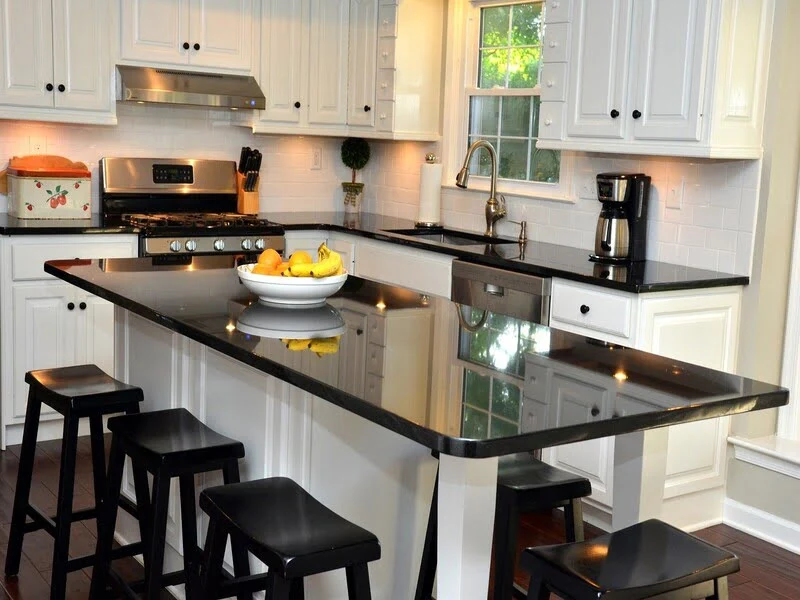
- Kitchen platforms and countertops. Cooking oil, turmeric, lemon, vinegar, and tomato all reach the surface daily. Acids etch the polish within seconds; oil penetrates and stains. A sealer stops the staining but not the etching. On a white surface, both show.
- Bathroom and shower floors. Standing water is the problem, not the soap. Constant wetting drives moisture into the slab and the bed beneath it, which is how iron specks turn to rust spots and how setting-bed salts surface as discolouration. Most acidic bathroom cleaners also dull the polish over routine use.
- Bar tops, restaurant tables, and anywhere food and drink are served. Wine, citrus, and cola are acids. The damage is not spillage you clean up — it is permanent dulling.
- Exterior paving and open terraces. Rain, thermal movement, and pollutants work against a Mohs 3 stone. Some sheltered exterior cladding is workable; horizontal exterior surfaces are not.
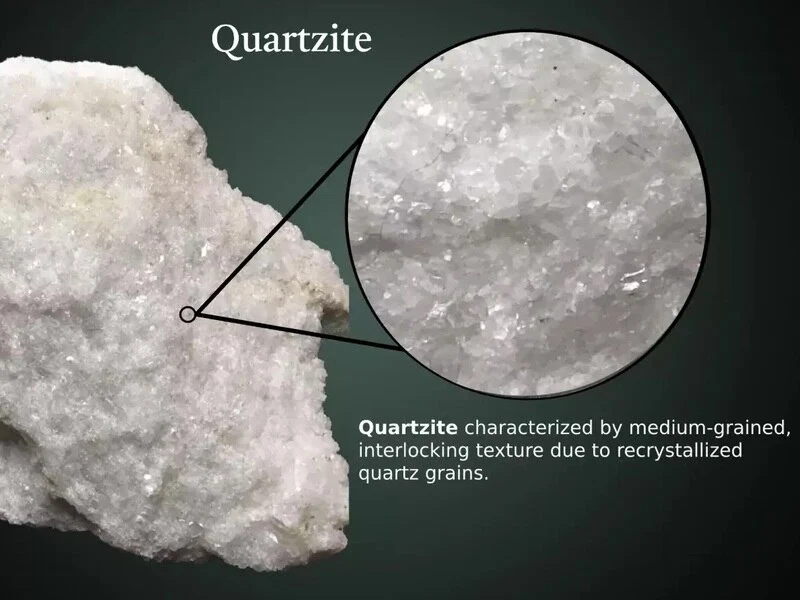
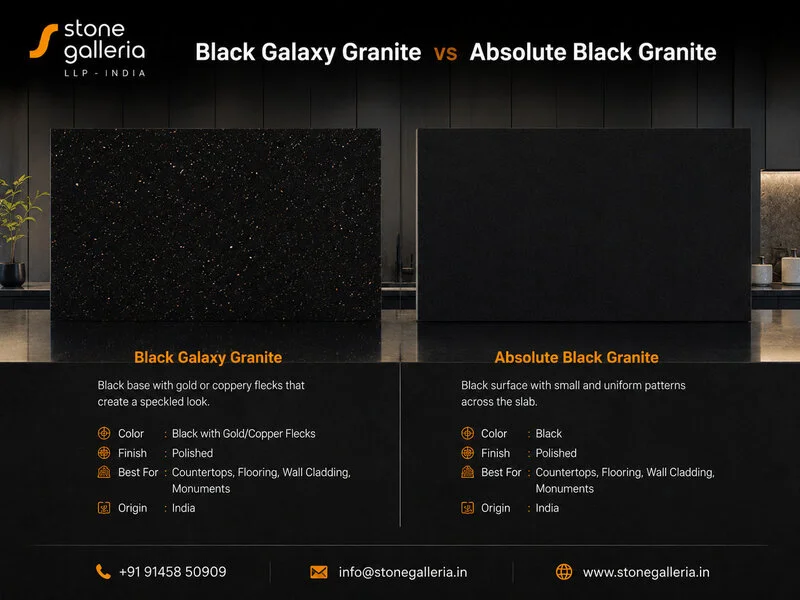
If the room has water, oil, or grease as part of its daily use, choose granite or quartzite instead. We sell Vietnam White marble, and we still say this — a floor that yellows or a countertop that etches in six months is a complaint we would rather not have, and it is not something a better sealer can fix.
How do you check the quality of Vietnam White marble?
There are large number of parameter on which any stone that can be checked thats can be physical and chemical properties. However, here we are going discuss on visual parameters.
Let's talk about what to look for in Vietnam White because, to someone buying it for the first time, everything seems the same.
- Uniform white background and crystal size.
- Consistent colour across the lot.
- Controlled veining without unwanted dark patches, yellow stains, or mineral concentrations.
- Minimal open fissures, cracks, pinholes, pitting, and repaired areas.
- No resin bleed, mesh separation, edge chips, warping, or uneven polishing (if pre-polished)
- Consistent slab thickness, square edges, and accurate cutting.
High Quality Vietnam white marble is referenced as having a uniform base colour usually bright white colour, uniform crystals, limited pitting, balanced veining, good polish, and minimal structural repairs.
ALSO READ | Natural Stone Defects: What’s Normal, What’s Not, and How to Choose the Right Slab
Does Vietnam white marble yellow over time?
Yes and no, but rarely because of the stone itself. In most cases the yellowing is due to what's behind or on top of the marble, not the marble.
The reason can range from resin and mesh backing during processing at factory level or material used during bed setting and adhesive or lower grade stone with relatively high iron content, or mistake in choosing cement, sealers, waxes, topical coating and cleaners.
Answer to why stone itself doesn’t yellow over the period of time, as we have discussed earlier - Vietnam White is predominantly calcitic marble (CaCO₃) or not dolomitic marble (CaMg(CO₃)₂) but its may be present as minor component rather than the dominant mineral.
Right stone for your project?
Tell us where it is going. If Vietnam White is wrong for it, we will say so and point you to what works.
Ask before you buyCalcite has no light-sensitivity hence It doesn't oxidise; the carbon in it is already fully oxidised as carbonate. UV does nothing to it.
It has a very low levels of colouring impurities, especially iron-bearing minerals.
How do you look after Vietnam White marble?
Three things account for almost everything that goes wrong: etching, staining, and rust spots. Only one of them is a cleaning problem.
Etching is acid dissolving calcite. Lemon, vinegar, wine, and most supermarket bathroom cleaners leave a dull mark on a polished surface within seconds. It is not a stain and will not clean off. Use pH-neutral cleaners, and pick honed over polished where spills are routine. Sealing does not stop etching — sealers block absorption, and etching happens on the surface above the sealer.
Staining is what sealing does prevent. Use an impregnating sealer, never a topical coating or wax, and seal only when the slab is fully dry. Reapply when water dripped on the surface starts darkening the stone within five minutes.
What sealing does and does not do:
| Sealer prevents it? | |
| Oil and food staining | Yes |
| Water marks and ring stains | Mostly |
| Acid etching | No |
| Scratching | No |
| Yellowing from resin or setting bed | No |
Rust spots come from iron — either pyrite specks already present in a lower-grade slab, or rebar, metal fittings, and iron-rich borewell water reaching it from outside. Grade selection and keeping the stone dry matter more here than any sealer.
What is repairable. Scratches, etching, and dull traffic lanes come out with diamond repolishing in place, which removes a fraction of a millimetre. A 20mm slab takes this many times over its life. What repolishing cannot reach: deep chips, cracks, rust rooted below the surface, and yellowing from the resin backing or setting bed.
Vietnam White Marble Price in India
Before we address the pricing of Vietnam white marble, we should say up-front that several variables are at play, such as thickness, finish, size, grade, and crystal size, among others, and there are overalps (Commercial-grade slab in a large size can cost more than a better grade in an awkward one), making pricing something that cannot be easily stated in a simple table.
Additionally, because these rates are factory pricing in Kishangarh for bulk sales, there will be significant variations if you are in another part of India due to factors like transportation, stocking, reseller margin, and much more.
We invite you to visit our Vietnam White Marble product page, which features an interactive calculator that takes these factors into consideration. For those who would like to stay and read more, Vietnamese white marble blocks come in a wide range of sizes, and their quality can be broadly classified as Best, Standard, and Commercial grade. The price will also vary depending on whether you want to purchase pre-polished, honed, or unpolished.
For 17 mm unpolished slabs, prices run from around ₹300 to ₹1,500 per sq ft depending on grade and slab size
According to Mr. Shubham Maheswari and Mr. Abhishek Toshniwal of Stone Canvas, who recently visited Vietnam in July 2026 for block sourcing, the price of Vietnam white marble is rising as a result of depleted sale-able resources and restricted mining area.
Manufacturing and Processing In India
As we have said earlier, Vietnam white marble is found and quarried in Vietnam and many entities including stone galleria import blocks from quarries in Vietnam and then cut, polished and fabricated at the factory in India and Kishangarh in Rajasthan handles the largest share of this work due to well established marble market, connectivity and ready-made large availability of cutting and processing capacity.
ALSO READ | Advice for Visiting a Stone factory
Conclusion
Vietnam White is a good stone in the right place and a poor one in the wrong place, and most of what goes wrong with it is decided before the slab reaches site.
Buy it for flooring, wall cladding, staircases, pillars, temple and mandir work, and carving. It is bright, it takes a fine polish, it carves cleanly, and it costs considerably less than the European whites it resembles.
Do not buy it for kitchen platforms, shower floors, bar tops, or exterior paving. In those places it will etch, stain, or spot, and no sealer will prevent it. Choose granite or quartzite instead.
The rest comes down to two questions the trade does not answer well. Is the slab actually from Vietnam, or is it a cheaper white sold under a Vietnamese name? And what was done to it in the factory — which resin, which grade, which sorting? Published guidance on this stone contradicts itself, test reports are almost never produced, and the differences that matter are not visible in a photograph.
That is why we import blocks rather than buy finished slabs. Stone Galleria, through our sourcing partner Stone Canvas, brings Vietnam White blocks in directly and cuts, resins, polishes, and fabricates them at our factory in Kishangarh — slabs, tiles, ready-made steps and risers, table tops, vanity tops, and mandir CNC work. It means we know what resin went on, which lot a slab came from, and what we are selling you.
We provide written origin confirmation before cutting and before you pay the final amount. If you want a specific lot tested, we will have it done at a NABL laboratory and pass on the charges at cost.
If you are buying elsewhere, ask for the same things:
- Country-of-origin declaration and quarry name
- Import documents or block identification
- Photographs and inspection of the complete slabs, not samples
- A written invoice stating Vietnam-origin natural marble, not merely "white marble"
A supplier who can produce those is worth buying from. One who cannot is asking you to take colour on trust.
Other stones we've covered in detail:
- P White Granite: A classic and yet super affordable choice with versatile applications.
- Alaska White Granite: Explore its cool tones and refined elegance.
- Fantasy Brown Granite: Is it granite, marble, quartzite, or dolomite?
- Markino Black Granite: Discover how its striking look can elevate your space.
- Black Galaxy Granite: The world’s most popular Indian granite known for its luxurious appeal.
- Lakha Red Granite: A Complete Buying Guide