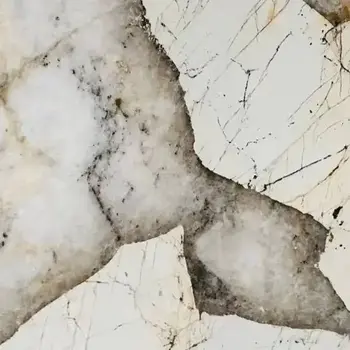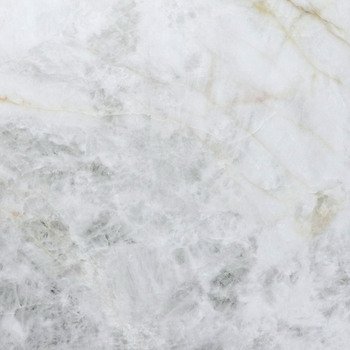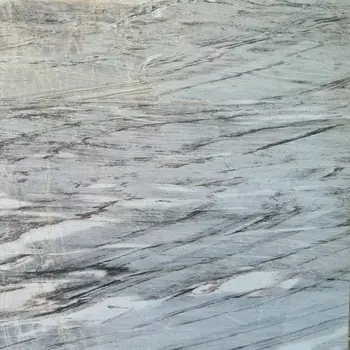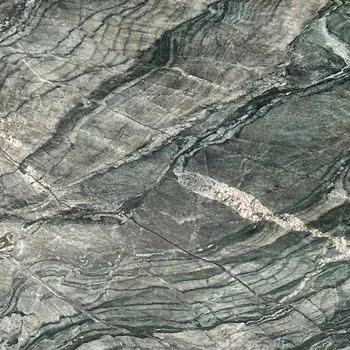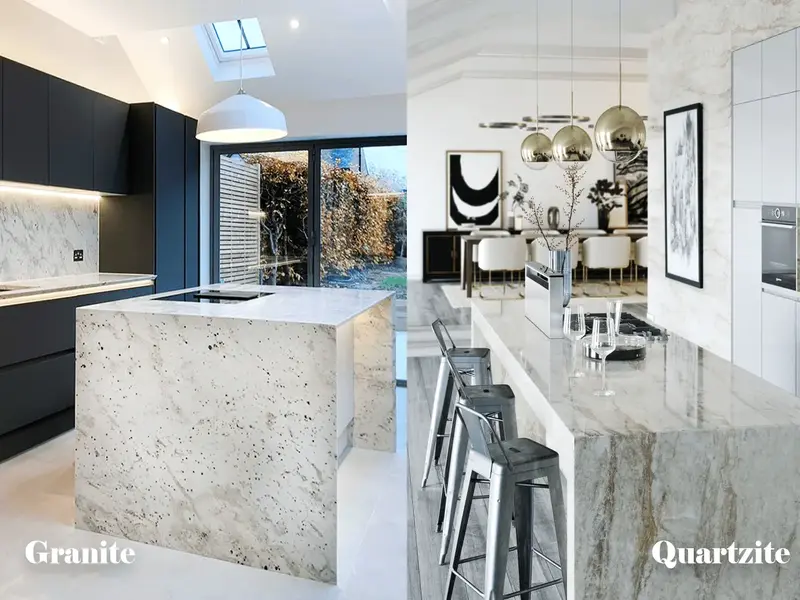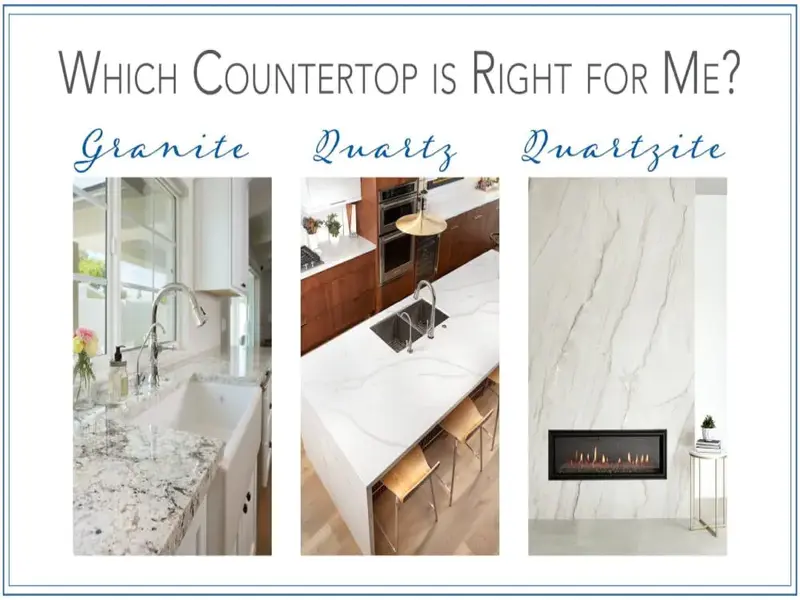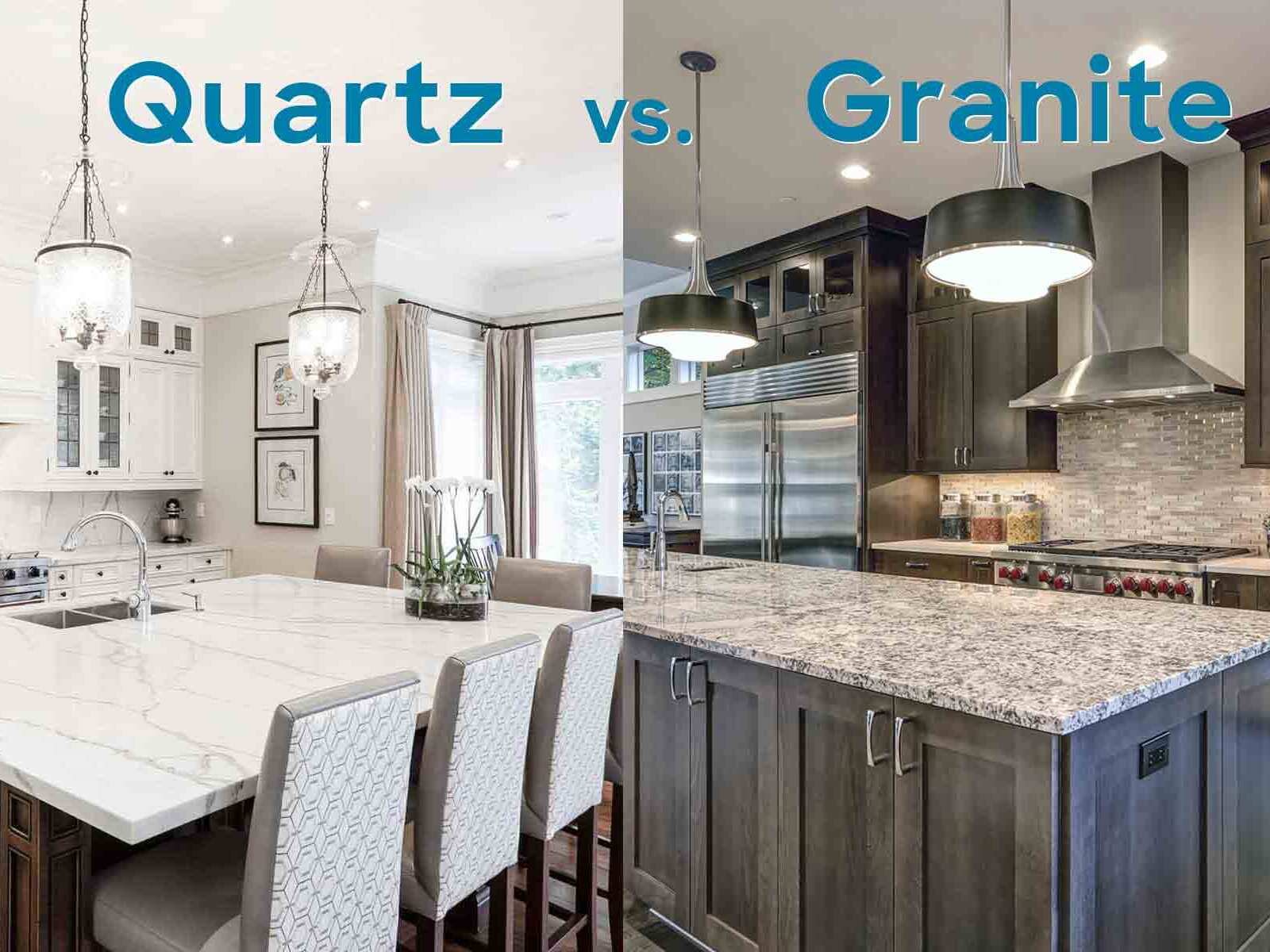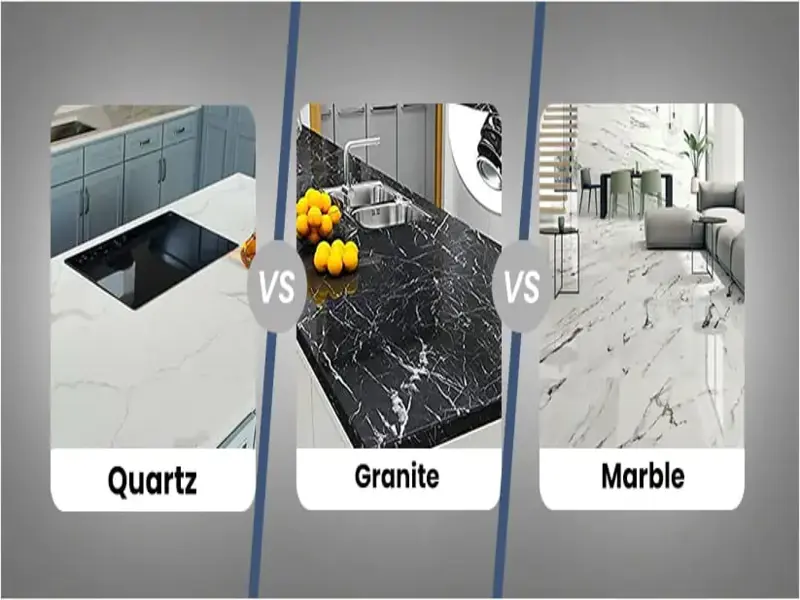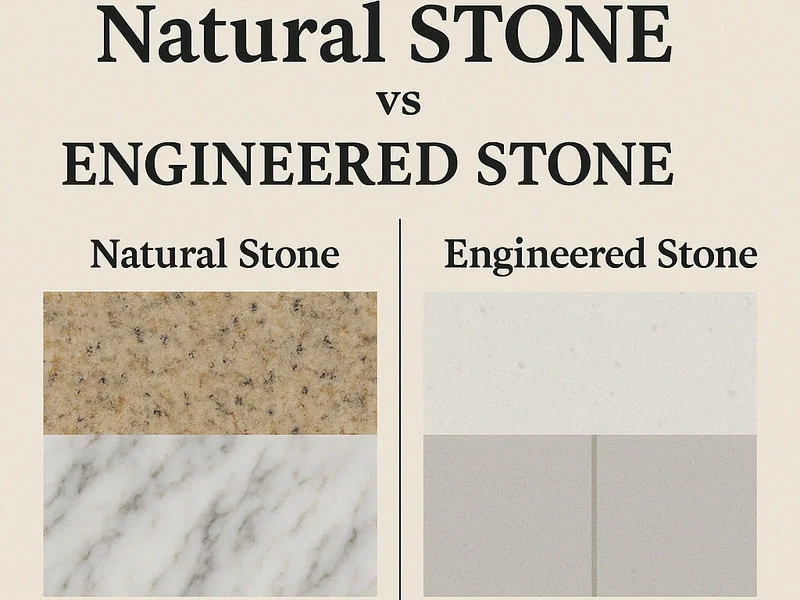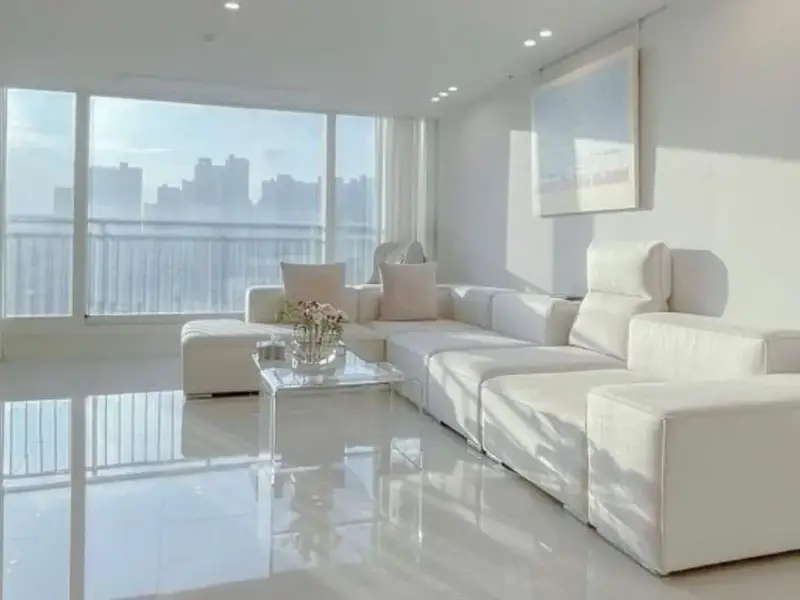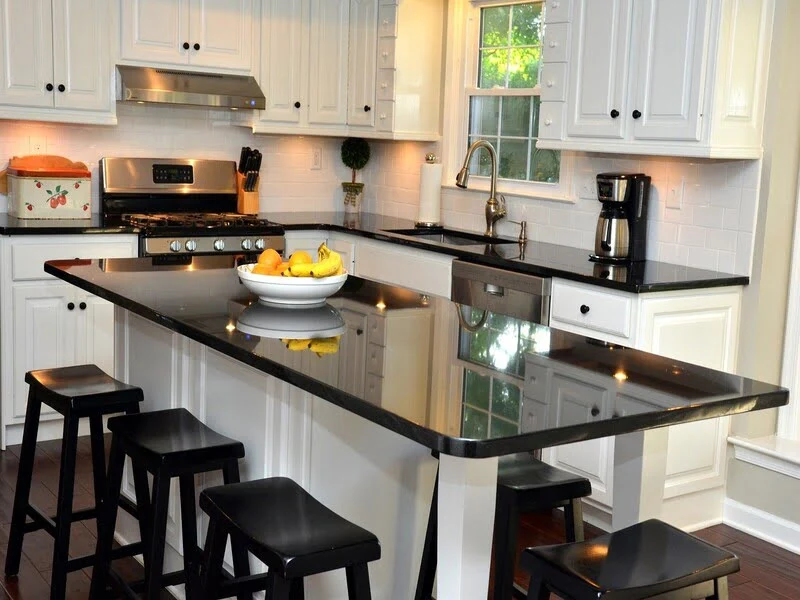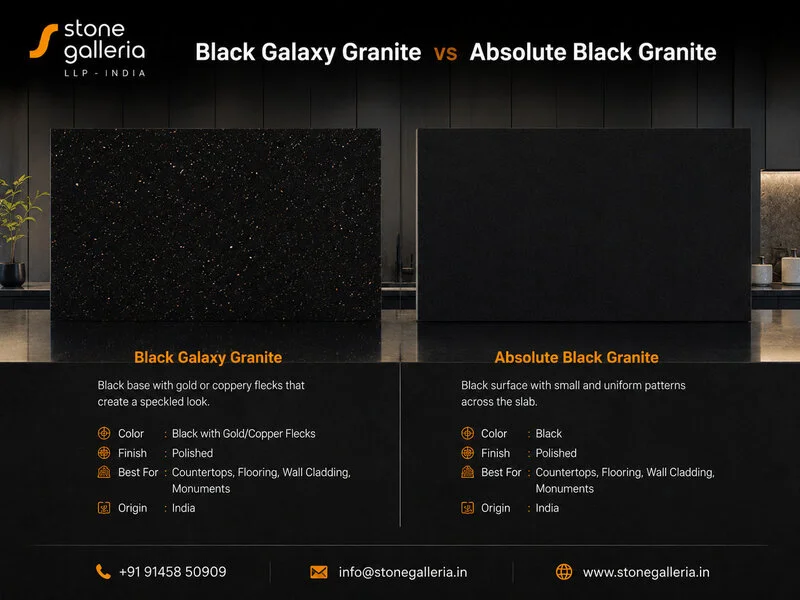
Quartz and quartzite get confused constantly, and the names don't help. But they're built completely different:The one factor that differentiates between quartz and quartzite is that quartz is manufactured in a factory, while quartzite is extracted from a quarry and that, by itself, determines the rest of the criteria: price, resistance to heat, sealing, and ability to be used outdoors. If you're comparing quartz vs quartzite for a kitchen, or weighing either one against granite, we are here to answer your questions.
ALSO READ | Natural Stone vs Engineered Stone: Which One Should You Choose?
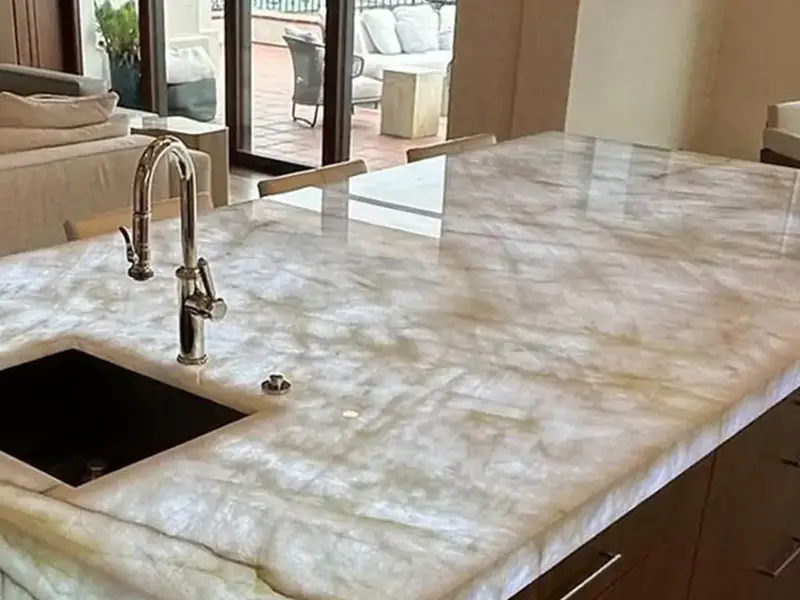
What Is Quartzite? Is Quartzite A Natural Stone?
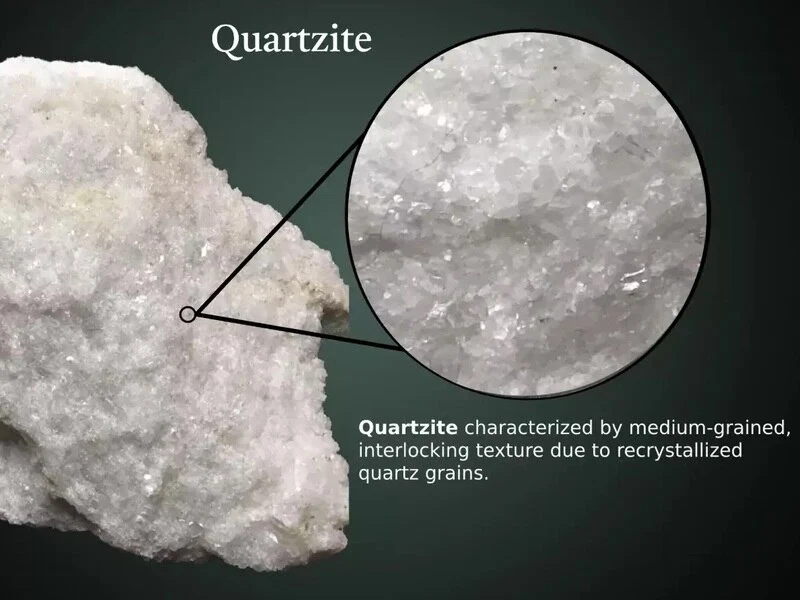
Yes, quartzite is 100% natural stone and is not man made stone unlike quartz which is engineered or man made stone. Quartzite is natural stone, quarried from the ground in blocks and cut into slabs.
Quartzite starts as sandstone. Bury that sandstone deep enough, under enough heat and pressure from tectonic movement, and the individual sand grains recrystallise and fuse. The pore spaces close. What was a gritty sedimentary rock becomes a dense interlocking mesh of quartz crystals — a metamorphic rock, non-foliated, 90 to 99% silica by weight.
That fusion is what you can actually test for. Sandstone breaks around its grains; true quartzite breaks straight through them, because the grains are no longer separate things held together by cement. It's also why quartzite feels glassy rather than gritty, and why it sits at Mohs 7 while its parent rock does not.
The transition is gradual, which matters commercially. ASTM C616 handles this by classifying quartz-based stone into three grades by free silica content — sandstone, quartzitic sandstone, and quartzite — with quartzite required to absorb no more than 1% water by weight and carry a minimum density of 2560 kg/m³. A slab either meets that specification or it doesn't. The trade name on the invoice has no bearing on it.
Colour comes from what else was in the original sand. Pure quartz sand gives white or pale grey. Iron oxide gives pink through red. Chlorite and mica give greens and greys. Those same impurities are what decide whether a slab transmits light or reads as solid.
Stone Galleria LLP, a natural stone i.e., granite, sandstone, marble, quartzite and slate manufacturer and exporter in Rajasthan, cuts quartzite from block at Kishangarh, Jalore and Pali — so when we say a slab is quartzite, it comes with the block it was cut from.
ALSO READ | Everything You Need to Know About Quartzite Slab – A Comprehensive Guide
What Is Quartz? Is Quartz Man-made?
Quartz refers to engineered quartz, a man-made, composite, engineered stone slab.
Quartz isn't quarried it's built. Crushed quartz stone, usually 90–94% of the mix, gets bound with 6 to 10%resin and pigment and pressed into slabs. Because it's manufactured, colour and pattern stay consistent from slab to slab, and matching pieces across a large kitchen is straightforward. Brands like Silestone, Caesarstone, Cambria, etc., produce many of the quartz slabs on the market.
On day to day basis, quartz countertops are low effort. The surface does not smudge easily, needs no sealing, is easily cleaned with a damp cloth and mellow soap. Where it struggles - the resin doesn't like sudden heat and some formulations may not be suitable for outdoor use because they can fade with prolonged sun exposure and a hot pan that's just come off of the stove can scorch or crack it.
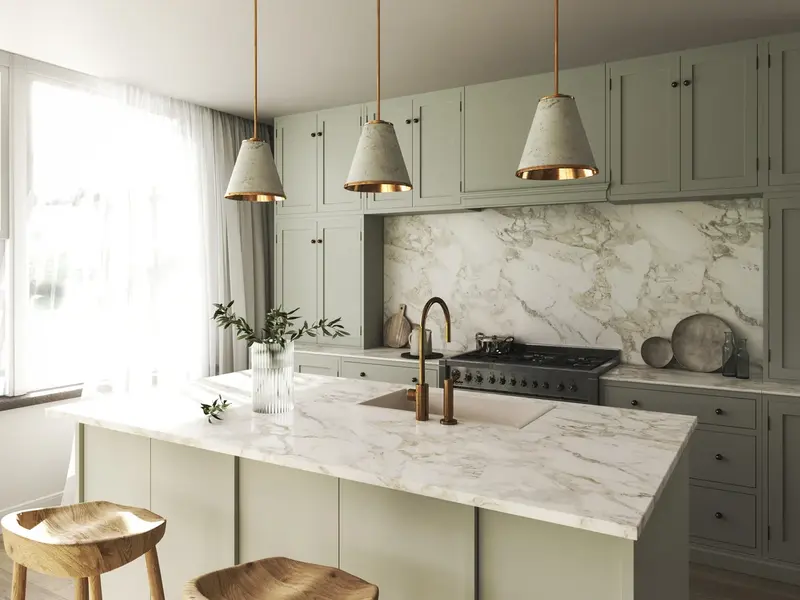
What Is The Difference Between Quartz And Quartzite?
Now that we know what each material is, let’s compare quartz vs. quartzite directly. The table below highlights the key differences in various features:| Feature | Quartz (Engineered) | Quartzite (Natural) |
|---|---|---|
| Composition | Man-made engineered stone (mixes about 90% to 95% crushed natural quartz with polymer resins and pigments). Fabricated in factories into slabs. | Quartzite forms naturally - metamorphic rock (sandstone transformed under heat/pressure); quarried from the earth. |
| Appearance | Quartz comes in uniform colours, repeatable patterns, often with consistent, even colouring. Can mimic marble or granite but has a manufactured look (patterns repeat). | Unique & organic – each slab has one-of-a-kind natural veining and color variation. Often looks like marble with dramatic swirls, created by nature (no two slabs are the same). |
| Hardness | Mohs 7 aggregate, softer resin matrix | Mohs 7 throughout |
| Heat Resistance | Quartz contains resins that can melt or discolor around 300°F, meaning you must use trivets. | Quartzite withstands high heat over 1,200°F, allowing you to place hot pans directly on the surface (though using trivets is still wise to avoid thermal shock). |
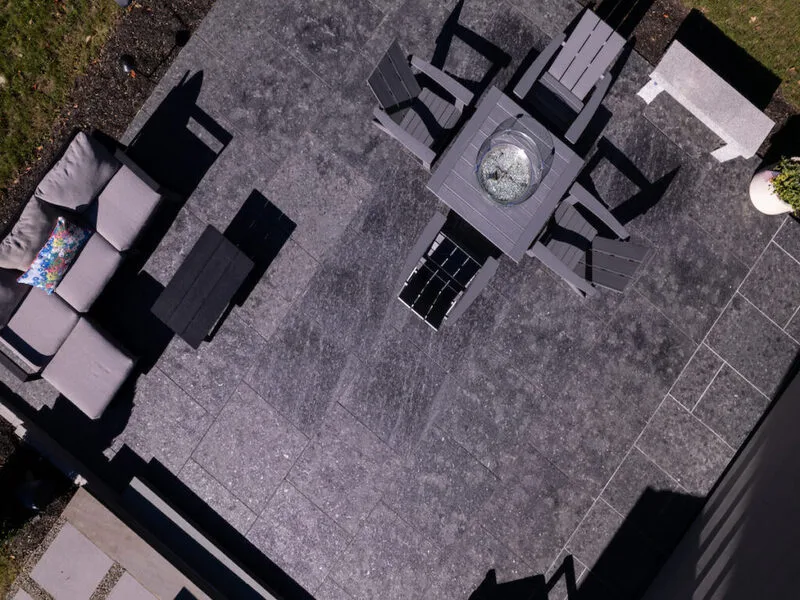
| UV Resistance | Poor – not UV-stable, so not recommended outdoors. Direct sunlight over time can fade the colors or cause yellowing of resin. Best for indoor use only. | Excellent – UV-resistant. Quartzite will not fade or degrade in sunlight, making it great for outdoor kitchens, patios, or sunny rooms. |
| Porosity & Maintenance | Non-porous – never needs sealing. Highly stain-resistant surface; just wipe spills. Very low maintenance (routine cleaning with mild soap/water). However, cannot be repaired by repolishing if damaged, and seams are visible like any stone. | Porous natural stone – requires sealing periodically to prevent stains. Wipe up spills to avoid absorption. Moderate maintenance: use pH-neutral cleaners, avoid harsh chemicals, and reseal 1–2 times a year. Can be re-polished by a professional if needed over the years. |
| Weight/Density | ~2.4 g/cc density. Slabs are heavy but slightly lighter than quartzite. Typically easier to fabricate and install (less tool wear). Lighterweight means a bit less structural load on cabinets. | ~2.6–2.7 g/cc density. Denser and heavier stone; a 3 cm quartzite slab is heavier than a 3 cm quartz slab. Its density contributes to durability, but it’s more challenging to cut and install (fabricators must use diamond tools, and the slab weight is higher). |
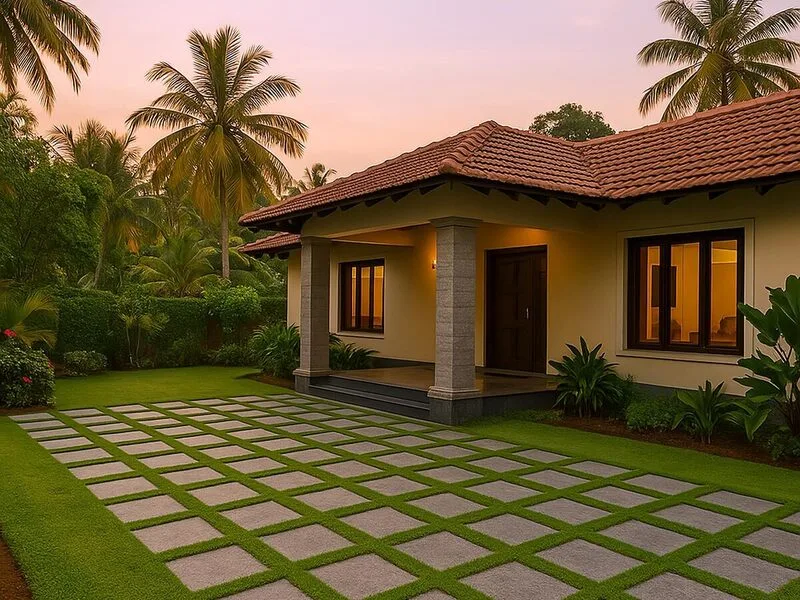
| Outdoor Use | Mainly for indoor applications only (kitchens, baths, interiors). Exposure to weather or sun can damage it. Also, thermal expansion from outdoor temperature swings can be problematic for the resin. | Excellent for outdoors. Used in exterior countertops, building facades, outdoor pavers, etc. It handles sun, rain, and temperature extremes well (similar to granite). Just ensure proper sealing for outdoor use to prevent moisture staining. |
| Finish Options | Typically sold in polished or matte (honed)finishes. Some brands offer textured or “leathered” finishes, but options are limited by manufacturer. The surface finish is done in the factory. | Available in many finishes: polished, honed (matte), leathered (textured), even flamed or brushed. Because it’s natural stone, fabricators can apply different surface treatments. This allows for more design texture (e.g., a non-slip honed floor, or a glossy polished counter). |
In summary, quartzite is a natural, harder-than-granite stone with high heat/UV resilience, while quartz is an engineered, non-porous surface that prioritizes low maintenance and design consistency. Next, we’ll compare their costs, which is often a deciding factor.
How Can You Tell Quartz And Quartzite Apart?
Five checks you can run in a showroom or a yard, in the order they're worth doing.
Not "which is better" — where it sits. A shaded indoor island and a west-facing terrace have different answers, and the stone follows the site. Stone Galleria LLP, a natural stone i.e., granite, sandstone, marble, quartzite and slate manufacturer and exporter in Rajasthan, sells quartzite and not engineered quartz, so we will say when quartz is the better fit for your job.
Tell Us Where It GoesLook at the edge. This is the fastest one. On quartzite, the veining continues through the thickness of the slab — what you see on the face carries over the edge and out the other side, because the pattern is the rock. On quartz, the pattern is applied during pressing and mostly sits near the surface. Look at the raw edge of a cut piece and the difference is usually obvious.
Look for the repeat. Walk down a rack of quartz slabs of the same product and you'll see the same veins in the same places. Natural quartzite can't do that. If two slabs match each other exactly, it's manufactured.
Scratch the back with a steel blade. Quartzite won't take a mark from steel — the knife slides off. Quartz will scratch slightly, because the resin binding the grains is softer than the grains. Do this on the underside or an offcut, never on a slab's face.
Drip water on it and wait. Leave a few drops on an unsealed spot for half an hour. Quartzite darkens where the water sat, then dries back. Quartz doesn't change at all, because there's nothing for the water to enter. This also tells you whether a quartzite slab needs sealing.
Drip vinegar on an offcut. This one isn't for separating quartz from quartzite — it's for catching a mislabelled marble. If the drop fizzes or dulls the surface, the stone contains carbonate and is a dolomitic marble, not a quartzite, whatever the name on the slab says. This is the test that catches Super White and Fantasy Brown.
ALSO READ | How to Tell Real Quartzite from Marble and Sandstone
Can Quartzite Handle Heat? Can Quartz?
Yes, you can put a hot pan straight onto quartzite. No, you should not put one on quartz. That is the whole answer, and everything below is why.
Quartzite has no binder in it. It formed under heat and pressure, so a skillet off the burner does nothing to it. Engineered quartz is a different material: roughly 90–95% ground quartz held together with 5–10% polymer resin. The quartz is fine with heat. The resin is not. Depending on the formulation it starts to soften somewhere between about 65°C and 150°C, and most manufacturers set their guidance at the low end of that. A cast iron pan off a medium-high burner sits at 200–315°C. Even a mug of boiling water is above 100°C at its base.
What you get is a white or yellowish mark, a dull patch, or fine surface crazing. It cannot be polished out, and replacing the affected piece is usually the only fix. Most quartz warranties exclude heat damage, so that cost is yours. Granite beats quartz here for the same reason quartzite does — no resin, nothing to soften.
One caveat on quartzite. It will not scorch, but it is still stone, and stone cracks when one part expands faster than the part beside it. If a slab has a fissure running through it, a pan dropped on that spot is where a crack starts. Use a trivet on fissured material. On sound slabs, heat is not something you need to think about.
For the fuller treatment, including how quartzite behaves around a cooktop and outdoors, read Quartzite Heat Resistance: A Comprehensive Guide.
Is Quartzite Harder And More Durable Than Quartz?
Quartzite is harder. Quartz is less porous. Neither answer settles which is more durable, because the two words describe different problems.
On hardness, quartzite sits at Mohs 7 — quartz is the reference mineral that defines 7, so nothing made of it goes higher. That puts quartzite above granite at 6 to 6.5, which is why it scratches glass and shrugs off a knife blade. Engineered quartz uses the same mineral at the same hardness, but the resin holding it together is softer than the grains it binds, so a slab scratches a little more easily than solid quartzite. Neither is scratch-proof. Both will mark if you drag something harder across them.
On porosity, quartz wins outright. It has no pore structure to speak of, because the resin fills the voids during pressing, and it never needs sealing. Quartzite is stone and does absorb. ASTM C616 caps absorption at 1% by weight for material to qualify as quartzite, which is low — but not zero, and oil or wine left sitting will find its way in. Published sealing intervals run 12 to 18 months, though that figure comes from suppliers and sealer manufacturers rather than field data. The honest check is simpler: put a few drops of water on the surface and leave them. If the stone darkens within half an hour, it needs sealing.
Then the two things quartzite wins on. Heat, as covered above. And UV — quartzite holds its colour in sunlight, while quartz resin yellows and fades outdoors, which is why every major quartz warranty excludes exterior use.
On silica, quartzite is 90–99% SiO₂ — the highest of any natural stone in commercial use. C616 classifies quartz-based stone by free silica content precisely because that number is what separates quartzite from sandstone.
Some quartzite is translucent, most is not. High-purity varieties like Cristallo transmit light and can be backlit; Indian grey and green quartzites carry enough mica and iron to read as opaque. Thickness and any mesh backing decide it more than the variety name does.
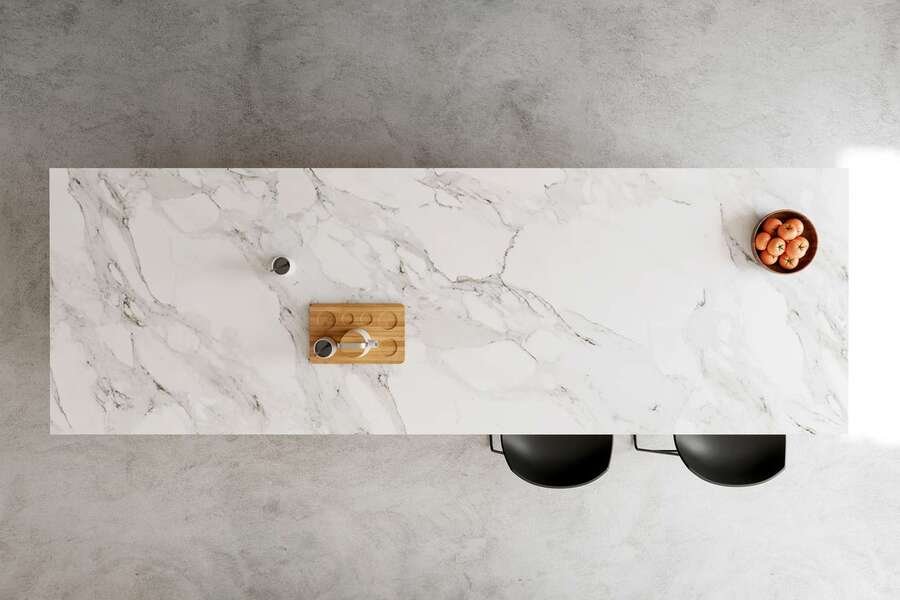
Which Is Better For A Kitchen Countertop, Quartz Or Quartzite?
Quartz, for most indoor kitchens. Quartzite, if the counter sees sun, real heat, or you want stone that looks like stone. Here is how that breaks down.
Pick quartz if the kitchen is indoors and you want to stop thinking about it. No sealing, nothing absorbs, and a spilled glass of red wine overnight does nothing. If you have a long run or a large island and want the pattern to carry across the seams, quartz is the only one of the two that can do it — slabs come off the same line and match. Landlords, resale renovations and families who want the counter to be a non-issue for fifteen years are all better served by quartz.
Pick quartzite if the counter gets direct sun or sits outdoors. This one isn't a preference. Quartz resin yellows under UV and every major warranty voids on exterior use, so a west-facing window over the counter or an outdoor kitchen rules it out. Quartzite holds its colour.
Pick quartzite if you cook seriously. Pans come off the burner and land on the nearest surface. If that's how your kitchen runs, a material that marks permanently at 65°C is the wrong material, and no amount of trivet discipline survives a busy evening.
Not "which is cheaper" — cheaper measured how. Quartz is usually quoted fabricated and installed, quartzite ex-factory, and the two numbers cannot be compared. Send your variety, thickness and finish and we will quote ex-factory Kishangarh before GST and freight, FOB for export.
Get A Comparable QuoteOn budget, it depends which quartzite. Commercial-grade quartzite comes in below almost any engineered quartz slab. Select-grade and imported quartzite runs well above it. If you have a hard ceiling per sq ft, quartzite is the one with an option at both ends — quartz has a floor it doesn't go under.
One thing to accept either way. Quartzite is natural, so the slab you get is the slab that block gave. Veining shifts, colour shifts, and the sample chip won't represent the lot. If that variation will bother you every time you walk into the kitchen, choose quartz and don't look back.
We sell quartzite and not engineered quartz, so take the recommendation accordingly — but for a shaded indoor kitchen with a large island and no heavy cooking, quartz is the better answer and we'd rather you knew that before ordering.
Where Can Quartz And Quartzite Be Used Besides Countertops?
Both go well beyond kitchen counters, but they diverge sharply once water, sun or heat enters the picture.
Shower walls: quartz or quartzite?
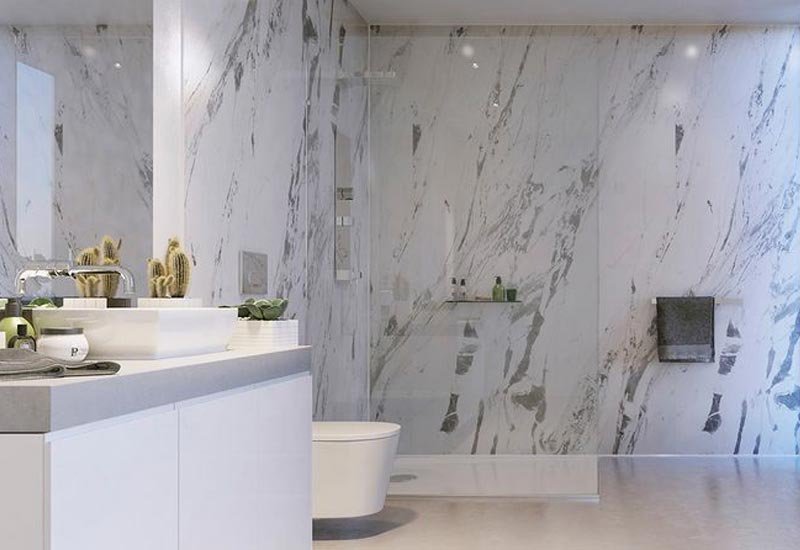
Both work, and for a shower wall specifically, quartz has the edge. It absorbs nothing, so there's no sealing schedule on a surface that gets soaked daily, and a full slab means one or two joints instead of a grid of grout lines. The resin objections that rule quartz out elsewhere don't apply here — a shower wall sees no UV and no hot pans. Water alone doesn't touch the resin.
Quartzite works too and looks better doing it, with the caveat that it needs sealing and that hard water leaves mineral deposits on stone more visibly than on resin. Honed rather than polished is the right call on any shower surface, and if the wall runs into the floor, honed or brushed is a safety requirement, not a style choice — polished stone underfoot when wet is genuinely slippery.
The one hard rule: shower floors are quartzite or tile, not quartz. Slab floors need slope to the drain, and cutting that fall into engineered quartz isn't practical.
Flooring
Quartzite handles floors, including high-traffic and outdoor. Mohs 7 means it doesn't abrade underfoot. Quartz is used on interior floors but is uncommon and not what it's built for — most manufacturers rate their slabs for vertical and horizontal surfaces, not foot traffic.
Facades and exterior cladding
Quartzite only. Quartz has no business on a building exterior for the UV reasons already covered — a south or west elevation in Rajasthan would fade within a couple of seasons.
Outdoor kitchens and bar tops
Quartzite, granite or porcelain. Not quartz, outdoor-rated collections aside.
Vanities, backsplashes, window sills, reception desks, table tops
Either. These are indoor, dry-ish, low-heat applications where the choice comes down to appearance and budget rather than performance. Quartz dominates commercial interiors — restaurant bar tops, lab worktops, hospital counters — because non-porous is easier to certify as hygienic.
Feature and backlit walls
Quartzite, and only the translucent varieties. See the note above on which ones transmit light and why thickness and backing decide it.
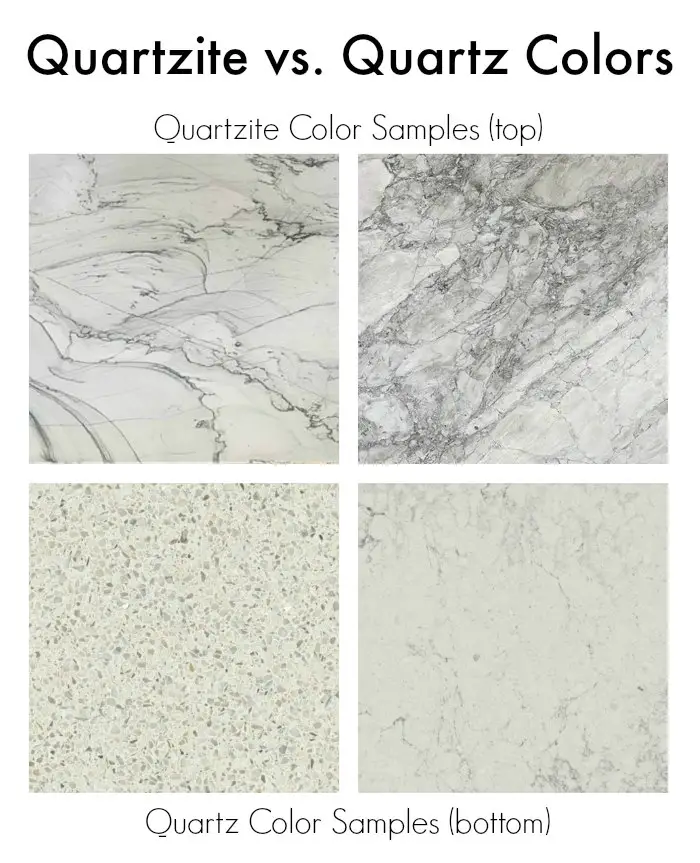
Which Is More Expensive, Quartz Or Quartzite?
"Is quartzite more expensive than quartz?" "Which is cheaper, quartz or quartzite?" "Which is more expensive quartz or quartzite?" "How much does quartzite cost?" and "What is the price difference between quartz and quartzite?" are some of the most common questions we receive regarding pricing.
Generally speaking, quartzite is more expensive than quartz. Of course, there are price overlaps; entry-level quartzite stone slabs might be less expensive than top-tier quartz slabs from premium brands. Nevertheless, on a like-for-like comparison, you will frequently find that quartzite is more expensive than quartz slab.
| Material | Price Range (₹/sq ft, ex-factory, Rajasthan) | Why |
| Quartz Slab | 240–650 | Quartz is manufactured, pattern programme, brand selling it and freight. |
| Quartzite Slab | 500–3,000 | Harder to quarry, limited, harder on blades, more fabrication labour, organic. |
Prices are for polished slabs, ex-factory, before GST, freight and wastage. Stone Galleria LLP, a natural stone i.e., granite, sandstone, marble, quartzite and slate manufacturer and exporter in Rajasthan, supplies the quartzite rows above; we do not manufacture engineered quartz, and the quartz figures are current market prices given for comparison.
Why Is Quartzite More Expensive than Quartz?
Why the difference? Quartzite’s cost is driven by the challenges of quarrying and cutting an extremely hard stone (it wears out diamond wires/blades and requires skilled labor), as well as its natural rarity and beauty. Each slab is unique, and certain colors of quartzite are only found in limited quarries.
Quartz’s cost is influenced by brand and design – for example, a quartz slab that perfectly mimics Calacatta marble with realistic veining might cost more than a plain quartz color due to R&D and demand – but overall, the manufacturing process allows for scaling up production and controlling costs.
Quartz Vs Quartzite Vs Granite Vs Marble: Which Should You Use Where?
Four materials, five properties that decide between them.
| Quartz (engineered) | Quartzite | Granite | Marble | |
|---|---|---|---|---|
| Mohs hardness | 6.5–7 | 7 | 6–6.5 | 3–5 |
| Water absorption | Effectively nil | Max 1% (ASTM C616) | 0.1–0.4% | 0.2–0.6%, etches regardless |
| Heat | Resin softens 65–150°C | No limit in a kitchen | No limit in a kitchen | No limit, but stains from oil |
| UV stability | Poor — yellows outdoors | Full | Full | Full |
| Price band (₹/sq ft ex-factory) | ₹250-600 | ₹500-2500 | ₹50-500 | ₹50-3000 |
| Sealing | Never | Every 12–18 months | Every 1–3 years | Every 6–12 months |
Granite is the one people skip in this comparison and shouldn't. It gives you most of quartzite's performance — full UV stability, unlimited kitchen heat, lower absorption than quartzite — at the bottom of the price range rather than the top, and it's marginally softer at Mohs 6 to 6.5, which matters far less in a kitchen than the marketing suggests.
So: granite for outdoor, sun-exposed and budget-conscious work, and for anything where performance matters more than a marble look. Quartzite when you want that marble look and won't accept marble's etching. Quartz for indoor kitchens where you want zero maintenance and matching slabs across a long run. Marble when you want marble and have made peace with patina — it will etch, and sealing doesn't prevent that.
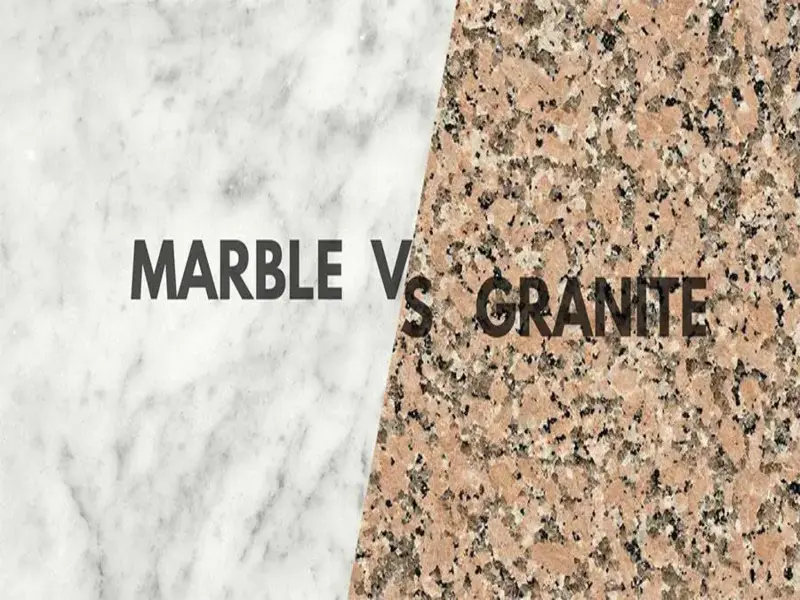
No, quartzite is not granite, and they are not interchangeable. Quartzite is metamorphic, formed from sandstone and made almost entirely of one mineral. Granite is igneous, cooled from magma, and made of several — quartz, feldspar and mica in visible crystals. That's why granite reads as speckled and quartzite reads as veined. For the full comparison, see Granite vs. Quartzite: Comparing Two Titans of the Natural Stone World.
ALSO READ | Comparative Analysis of Granite vs. Quartzite vs. Quartz: Why and What to Choose
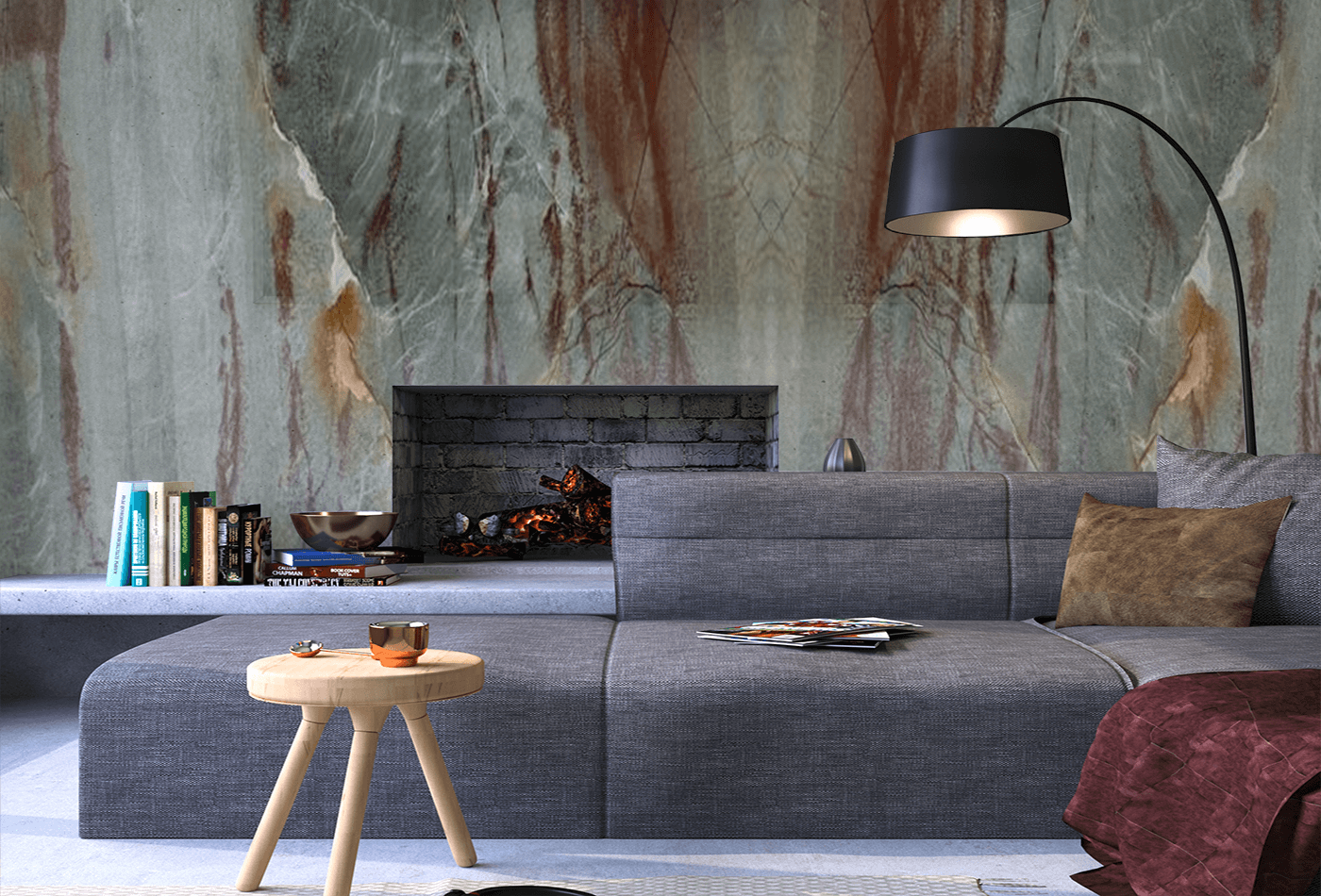
Conclusion: Quartz vs Quartzite - Which Should You Choose and why?
In conclusion, which is better, quartz or quartzite, and why? Both are excellent materials, but they are far from interchangeable. In the quartz vs. quartzite debate, there is no outright winner – the best choice truly depends on your priorities and application:
- Pick Quartz if you want low maintenance, stain resistance, need identical slabs across a large kitchen, a non-porous surface with no sealing requirement, and a budget-friendly wide selection of colours.
- Pick Quartzite if you want real natural stone, marble-like visual depth, outdoor applicability, you can work with slab-to-slab variation, takes heat directly, create backlit (translucent) look - Not all proivde, and good budget.
Stone Galleria LLP is a natural stone i.e., granite, sandstone, marble, quartzite and slate manufacturer and exporter in Rajasthan, processing at Kishangarh, Jalore and Pali. We cut quartzite from block and do not sell engineered quartz — so if quartz is the better answer for your kitchen, we have said so above. Send us your sizes and finish for current ex-factory prices.