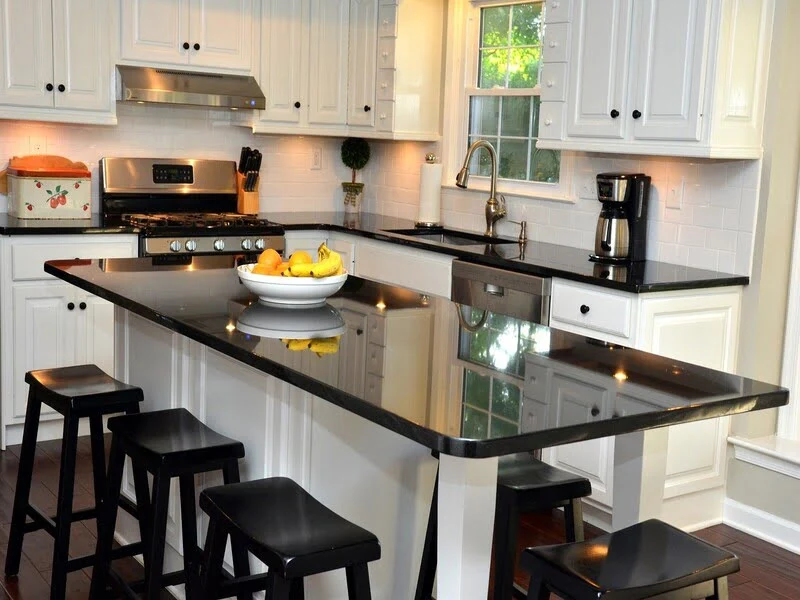
Pull up Pinterest. Search "black granite kitchen." Scroll for a minute.
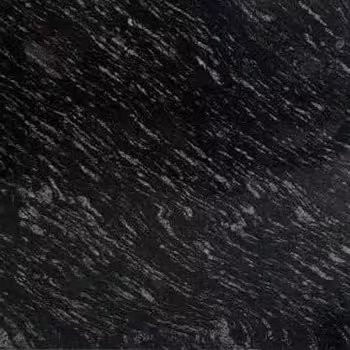
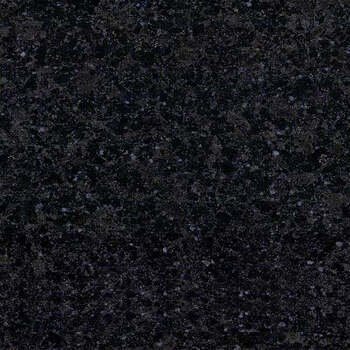
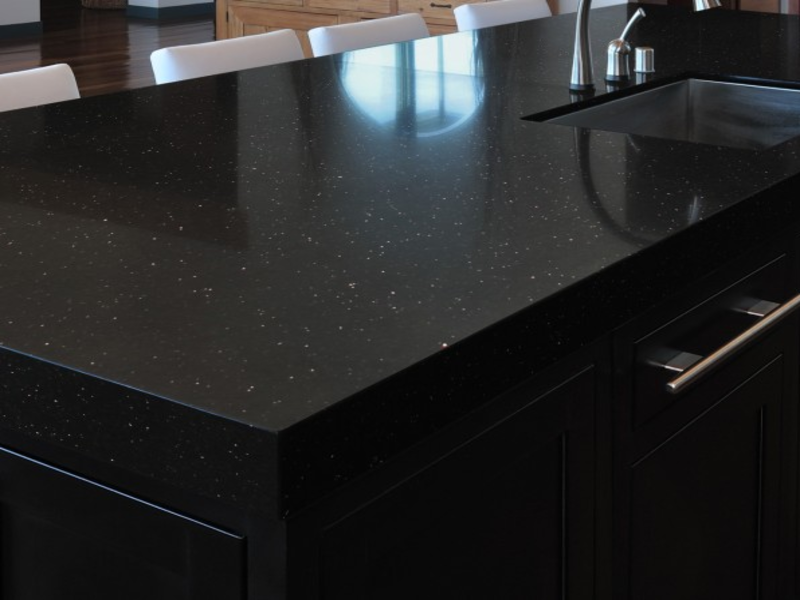
You'll see two stones, over and over. One is solid black, almost like dark glass. The other has gold or silver flecks scattered across it like stars. Most people can't tell which is which by name — but they have strong feelings about which one they want.
The first is Absolute Black. The second is Black Galaxy. Both are quarried in South India. Both features in the India's 10 Most Popular Granite Colours. And the same dilemma plays out around them everywhere — a homeowner sees both in a Pinterest board and can't tell them apart, an architect specifies one for a hotel lobby and wonders if the other would have worked better, an importer is quoted both at very different prices and can't explain why to their client, a designer pairs one with white cabinets and second-guesses the choice for weeks.
The question isn't which one is better. Both are good. The question is which one is right for what you're building — and the two stones solve different problems.
This guide makes the choice simple. We'll cover what each stone actually is, where it performs, where it doesn't, what it costs, what to watch for when buying, and when one substitutes for the other reasonably (and when it doesn't).
A Quick Note on Where These Stones Sit in the Market
India holds 46,320 million cubic metres of granite reserves across more than 200 commercial shades, according to the Indian Bureau of Mines. About 7% of those reserves are classified as black granite. Within that 7%, two stones dominate global trade: Absolute Black and Black Galaxy. Together they account for the majority of India's premium black granite exports.
This matters because it explains why the comparison comes up so often. India produces black granite in over a dozen commercial varieties — Steel Grey, R Black, Z Black, Imperial Black, Premium Black, and others — but global buyers consistently default to these two. Understanding why, and when each one is the right call, is most of the buying decision.
ALSO READ | Top Black Granite with Gold Elements: Veins, Flecks & Patterns for Stylish Interiors
Overview: Absolute Black Vs Black Galaxy Granite
Absolute Black and Black Galaxy are both black granites, but they are not interchangeable. They differ in surface pattern, grain size, how the stone reads visually, and where each one tends to be used.
| Feature | Absolute Black Granite | Black Galaxy Granite |
| Base Tone | Black | Black |
| Pattern | Solid and uniform | Gold , Copper/ silver speckles |
| Grain Structure | Micro | Medium |
| Visual Movement | Low | High |
| Monument Suitability | Widely used | Rarely used |
| Countertop Popularity | Common | More Common |
| Flooring Use | Homes and commercial spaces | Homes, commercial spaces, and decorative work |
| Market Preference | Europe, USA, Russia, CIS | Middle East, Asia, Africa |
| Design Style | Classical and minimal | Decorative, statement |
| Availability | Low to Medium | Very High |
Not sure which one fits your project?
Photos and small samples don't show the real colour, fleck size, or polish depth. Request full slab photographs of Absolute Black and Black Galaxy from our current inventory — and decide with your eyes, not a thumbnail.
Request Slab PhotosKnowing these basic differences makes it easier to match the stone to the kind of project you are planning.
Absolute Black vs. Black Galaxy Granite: Pros and Cons
At Stone Galleria, we've helped many navigate the choice between these two popular Indian black granites, and we believe the right pick comes down to lifestyle, design vision, and how one wants space to feel day after day.
Absolute Black Granite
Pros:
- One of the hardest, densest granites
- Solid black with little to no pattern or movement
- Low porosity
- Works in modern, minimalist, and Japandi-style kitchens
- Available in polished, honed, and leathered finishes
Cons:
- Shows fingerprints, water marks, and dust
- Honed finish is the hardest to keep clean
- Some slabs in the market are dyed to look darker — check the slab before you buy
- Can feel flat in a kitchen without wood, colour, or texture around it
Black Galaxy Granite
Pros:
- Black base with copper and gold flecks
- Flecks hide smudges and fingerprints better than solid black
- Pairs well with bronze, brass, and copper hardware
- Consistent pattern across slabs
- Adds depth without being busy
Cons:
- Costs more than Absolute Black
- Leans modern, may not suit traditional kitchens
- Polished surface still streaks if cleaned with the wrong product
ALSO READ | Black Galaxy Granite: Price, Grades, Quarry Source, Tiles & Countertop Buying Guide
How to Decide
- Pick Absolute Black if you want a plain, solid look and don't mind wiping the counter often.
- Pick Black Galaxy if you want some sparkle, warmer tones, and a surface that's easier to live with day to day.
See full slabs in person before deciding. Samples and photos don't show the real colour or the size of the flecks.
Absolute Black vs Black Galaxy Price
A point that surprises buyers reading Western forums: in India, Absolute Black is usually more expensive than Black Galaxy. The order often flips in export markets like the US and Europe, mostly because of demand and supply.
Rough Price Ranges for 2CM (Large) Slabs:
| Stone | Ex-factory Price (per sq. ft) |
| Black Galaxy Granite | ₹275 – ₹350 (~$3.00 – $3.80) |
| Absolute Black Granite | ₹350 – ₹500 (~$3.80 – $5.45) |
Prices vary by quarry and origin. Absolute Black from Khammam or Warangal generally runs cheaper than material from Chamarajanagar or nearby belts. Black Galaxy comes from a single source — Ongole — where a very large cluster of processing units operates.
Buying Absolute Black? Make sure it's not dyed.
The cheapest Absolute Black on the market is often dyed, and most buyers don't find out until the slab is on site. We supply only natural, undyed Absolute Black — direct from Khammam, Warangal, and Chamarajanagar units. Get a quote with full quarry traceability.
Get a Verified QuoteThickness, finish, and slab selection also move the number — 3 cm slabs, leathered or honed finishes, and larger uniform pieces all cost more.
Absolute Black vs Star Galaxy Granite Reviews
Across Houzz, Reddit and Quora threads, the conversation between Absolute Black and Star Galaxy (also called Black Galaxy) almost always starts with the same thing — looks. Absolute Black is a flat, uniform black with no movement, and people pick it for clean modern kitchens or as a soapstone alternative. Star Galaxy is the same black base but with tiny copper, gold or silver flecks scattered through it, and owners describe it as a starry-night look that pairs beautifully with oil-rubbed bronze and brass hardware.
From a distance Star Galaxy can almost read like polished Absolute Black — the sparkle only shows up close and under light. Both are hard, dense and stain-resistant, and many Absolute Black owners say theirs has gone years without sealing.
At Stone Galleria, the warning we keep repeating to buyers is the same one that surfaces in every forum thread — cheaper Absolute Black slabs are often dyed to enhance the colour, and inferior stones get passed off as the real thing. Always inspect the actual slab before fabrication, and don't hesitate to ask whether it's been dyed.
Where the two stones really separate is daily living. Polished Absolute Black is the one most owners regret — it shows every fingerprint, water drip and grease smudge, and honed Absolute Black is widely called the worst version to maintain unless you apply an enhancing sealer. The fix most people land on is leathered Absolute Black, where the texture hides smudges and soap and water is enough for daily cleaning. Star Galaxy is generally easier to live with because the metallic flecks visually break up the surface, so dust and minor marks don't stand out the way they do on solid black.
The trade-off is cost — Star Galaxy usually runs noticeably more expensive, which is why a lot of buyers who started out wanting it end up with Absolute Black or Black Pearl instead. From what we see at Stone Galleria, the honest takeaway is simple: choose Absolute Black (preferably leathered) if you want a sleek architectural look and don't mind a cleaning routine, and choose Star Galaxy if you want warmth, sparkle and an easier real-world kitchen.
Conclusion
Absolute Black and Black Galaxy are both flagship Indian granites, both deserving of their global reputation, and both hugely popular materials. They aren't competitors so much as complements — they solve different design problems and serve different project types.
At Stone Galleria, we work with both stones every day, and we've learned that the right choice almost always comes down to two things — the slab in front of you, and the supplier behind it. We source Absolute Black directly from processing units across Khammam, Warangal, and the Chamarajanagar belt, and Black Galaxy from established processing units in Ongole. No dyed slabs, no mixed grades or batches, no surprises at the container.
Whether you're an architect specifying for a hotel project, an importer building a container order, or a homeowner finalising a kitchen, we can walk you through slab selection, finishes, thickness options, and pricing tailored to your project. Reach out to Stone Galleria for sample kits, slab photographs, or a direct quote — and buy with the confidence that comes from working with a supplier who knows the stone, the quarries, and the trade.