Durante más de 30 años, Stone Galleria ha trabajado con piedra natural de Rajasthan. Absolute Black nunca ha sido parte de nuestra propia gama; nuestra región simplemente no lo extrae. Así que cuando un cliente nos pidió ayuda para conseguirlo, esperábamos un trabajo sencillo.
No lo fue. Cuanto más investigábamos, más complicado se volvía: el mismo nombre cubría docenas de piedras diferentes, con calidad y precio muy variables, y muy poca información clara y honesta para guiar a un comprador. Nos sorprendió lo complicado que resultó ser algo aparentemente tan simple.
Así que hicimos lo que 30 años en el negocio de la piedra te enseñan a hacer: profundizamos. Esta guía es lo que recopilamos en el camino: una mirada honesta y práctica a lo que realmente significa "Absolute Black", de dónde proviene y cómo distinguir lo bueno de lo ordinario.
La mayoría de las piedras vendidas como "granito negro" no son geológicamente granito en absoluto. El verdadero granito es rico en cuarzo y feldespato; los negros profundos suelen ser basalto, gabro, dolerita o diorita, rocas más oscuras y densas coloreadas por su alto contenido de hierro.
El comercio las agrupa todas bajo "granito" por conveniencia, y esa es la práctica aceptada. De hecho, el estándar americano (ASTM C119) permite formalmente que estas rocas ígneas oscuras sean extraídas y vendidas como "granito negro", aunque su composición difiere del granito real.
¿Qué es el Granito Absolute Black?
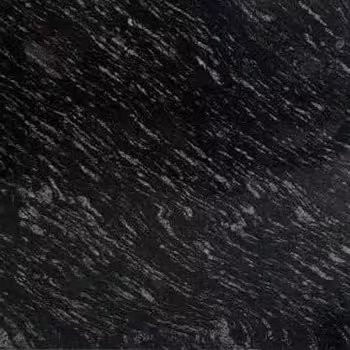
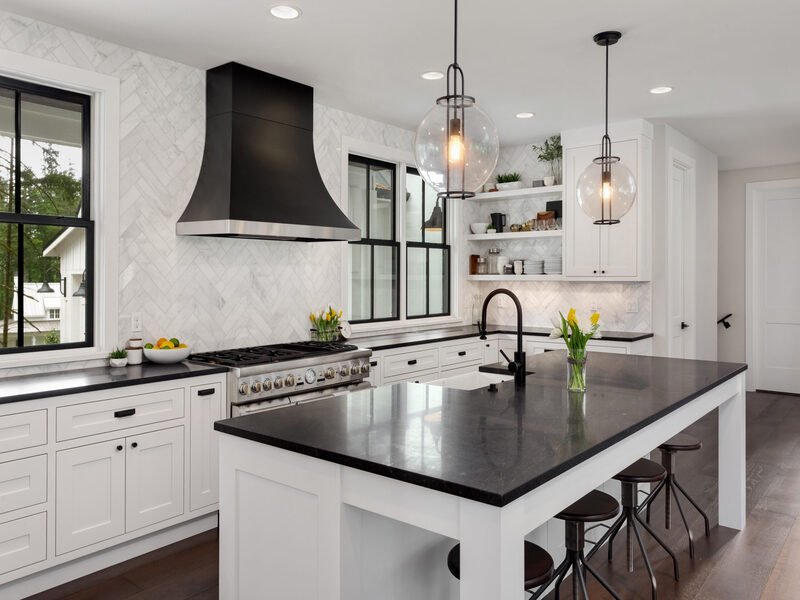
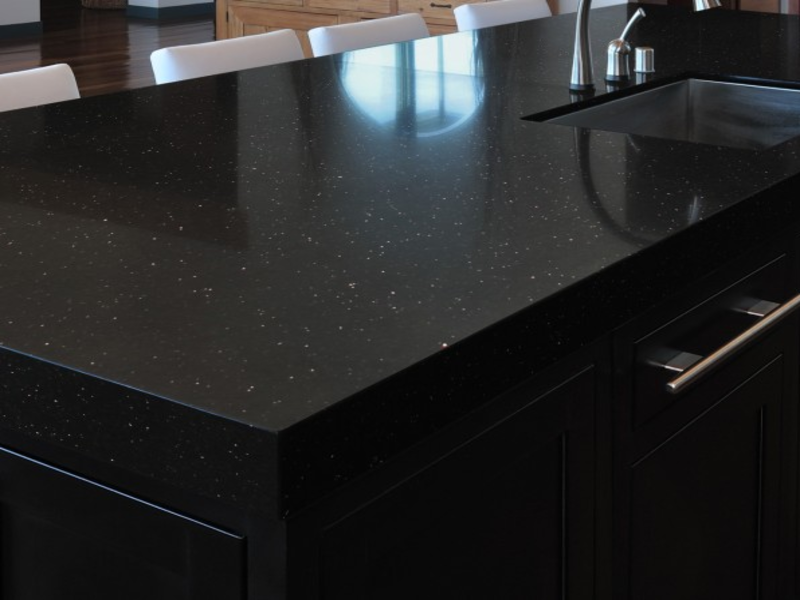
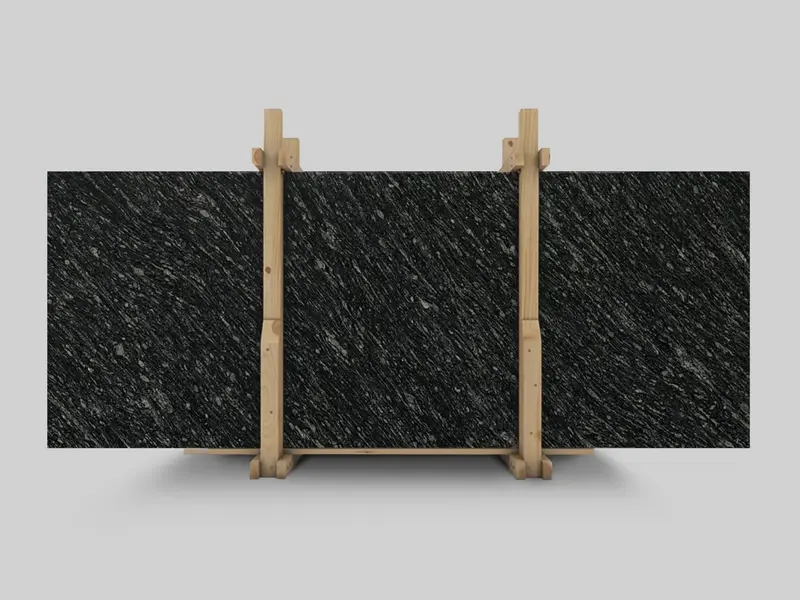
Absolute Black es una piedra natural extraída en muchos países alrededor del mundo. El color varía desde un negro oscuro, ligeramente más claro, hasta un negro azabache profundo, a veces con finas motas, dependiendo de la cantera. Es una opción muy popular para encimeras.
Una cosa que no es
A veces se confunde con cuarzo negro, que es una superficie hecha por el hombre (ingeniería), y con mármol negro, que es una piedra más blanda que se raya y se marca más fácilmente. Absolute Black no es ninguno de los dos; es una piedra natural dura y densa tipo granito, formada en el suelo durante millones de años.
"Absolute Black" can mean a dozen different stones. If you have been quoted for it and want to know what you're really getting, we are happy to help you make sense of it — no obligation.
Ask us a questionMientras que "Absolute Black" comenzó como el nombre de un granito específico, efectivamente se ha convertido en una etiqueta de categoría para el granito negro de muchas fuentes diferentes.
Piénsalo como la palabra "agua con gas". Eso te dice qué tipo de bebida es, pero no la marca ni de dónde proviene. "Negro Absoluto" funciona de la misma manera: te dice que la piedra es negra, pero no de dónde proviene o qué tan buena es.
- Múltiples canteras en India, Sudáfrica, Zimbabue, China y muchos otros países producen granitos vendidos bajo este nombre o nombres comerciales similares.
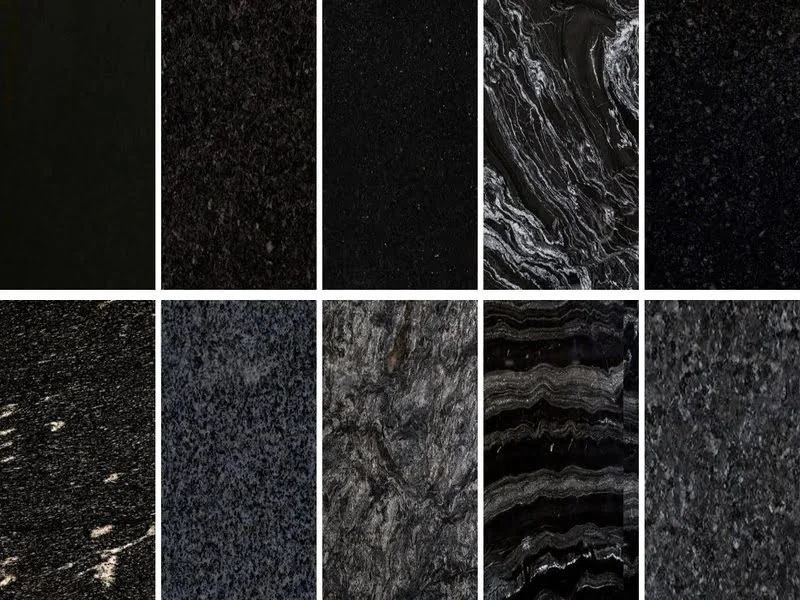
- La calidad, textura y tono varían significativamente entre las fuentes: algunos son verdaderos negros de grano fino, otros tienen vetas grises leves o matices marrones.
- Los proveedores y compradores lo utilizan como una etiqueta de grado/tipo en lugar de un producto de origen único.
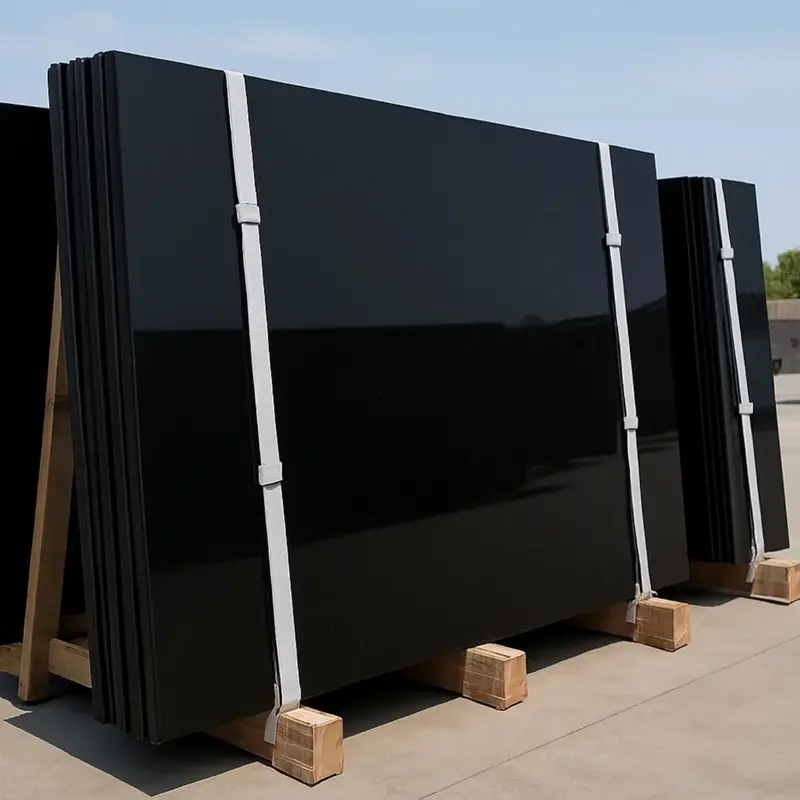
Variaciones principales dentro de la categoría "Negro Absoluto":
- Negro Absoluto Indio
- Negro Zimbabue/Negro Africano
- Negro China/Negro Shanxi
Canteras de Granito Negro Absoluto en India
Dentro del Negro Absoluto Indio, hay un gran número de canteras repartidas por cuatro estados del sur que producen diferentes variedades, cada una con sus propias características, calidad y puntos de precio.
Los depósitos más grandes y conocidos están en Karnataka (particularmente en el distrito de Chamarajanagar) y Telangana/Andhra Pradesh (alrededor de Warangal y Khammam).
| N.º | Ubicación | Características | Mejor caso de uso | Observaciones | Nivel de precio |
| 1 | Chamarajanagar | Negro azabache, Chamarajanagar Ultimate Black — grano casi nulo, gran consistencia. No se necesitan tratamientos. | Estatuas, monumentos, artefactos, lápidas, losas y azulejos para proyectos de lujo y prestigio | 3 grandes variedades: (i) Kotalwadi, (ii) Nagar, (iii) Alpha Black | Más alto |
| Mysuru, Karnataka | |||||
| 2 | Kanakapura | Oscuro, granos dorados micro visibles en inspección cercana | Losas y azulejos | -- | Premium |
| Bangalore, Karnataka | |||||
| 3 | Pochampalli | Oscuro, granos dorados micro visibles en inspección cercana | -- | Premium | |
| Hosur, Tamil Nadu | |||||
| 4 | Chittoor | Muy oscuro con granos micro azules y blancos; No se necesitan tratamientos. | Separado Nombrado como G20 y también considerado como Granito Negro Absoluto | Premium | |
| Andhra Pradesh | |||||
| 5 | Salem | Tono oscuro claro | Monumentos | Tamaños de bloque pequeños — No ampliamente disponible en formato de losa o azulejo | Rango medio |
| Tamil Nadu | |||||
| 6 | Tiruvannamalai | Tono oscuro claro | Rango medio | ||
| Tamil Nadu | |||||
| 7 | Kanigiri | Muy oscuro | Losas y azulejos | Gran variación entre bloques — difícil de obtener en grandes cantidades con consistencia | Económico |
| Andhra Pradesh | |||||
| 8 | Khammam & Warangal | Tono oscuro claro con pequeñas motas plateadas (A diferencia de Black Galaxy). | Abundantemente disponible; bueno para suministro a volumen. También llamado Khammam Black. | Más económico | |
| Telangana |
Nombres que verá para el mismo material (dentro de India)
Granito Negro Khammam/Kunnam, Granito Negro Z, Granito Negro Zed, Negro Jet, Granito Negro Premium de India, Granito Negro Warangal, Granito Negro Teléfono, Granito Negro Chamrajnagar, Nero Abssoluto, Negro Absoluto, Granito Negro de India, G20, Negro Kanakapura, neblina negra, Negro del Sur (dentro de India) y muchos más nombres similares.
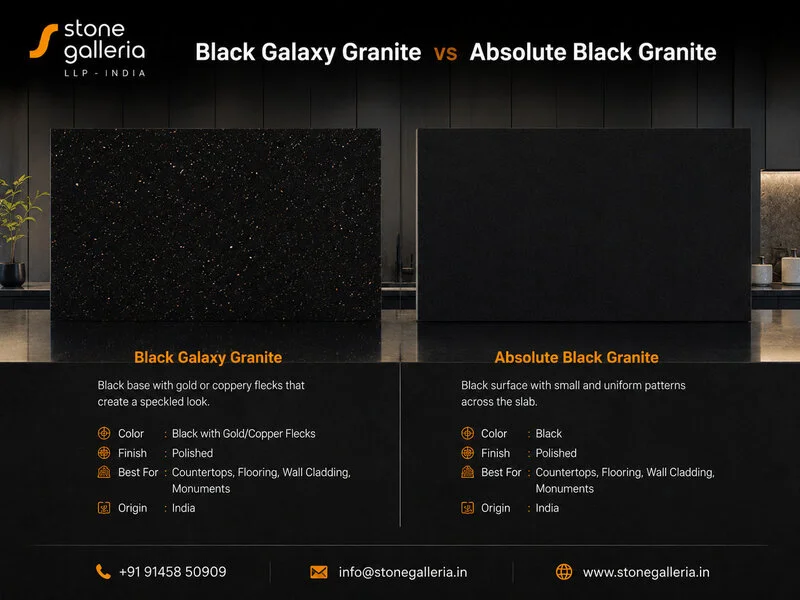
LEA TAMBIÉN | Negro Absoluto vs Granito Galaxia Negra
¿Por qué varían el tono y la calidad entre canteras?
El Negro Absoluto no es una piedra de un solo lugar. Proviene de diferentes canteras, y cada una se ve un poco diferente.
Different quarries give different blacks, at different prices. Tell us your project and budget, and we will help you match the right Absolute Black to it — honestly, including which grade you don't need to pay for.
Get sourcing helpLo principal que cambia es qué tan oscuro es. Eso depende del grano: cuanto más fino es el grano, más negro se ve. Grano más grueso, y se ve un poco más claro.
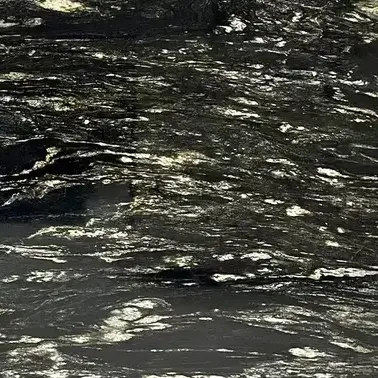
También verá pequeñas motas en algunos de ellos: un poco de brillo dorado o pequeñas manchas claras. Esos son solo los minerales naturales en esa cantera particular o incluso puede variar de una región a otra. No significa que la piedra sea de menor calidad, es solo cómo se formó ese depósito.
Así que un negro azabache sin motas y un gris oscuro con un poco de brillo pueden ser ambos Negro Absoluto genuinos. Simplemente provienen de diferentes terrenos. Y así es aproximadamente cómo funciona el precio también: la piedra más oscura y uniforme cuesta más, la piedra más clara y más fácilmente disponible cuesta menos.
Conclusión
"Negro Absoluto" no es una sola piedra: es un nombre compartido por muchas, de diferentes canteras y diferentes países, con niveles de calidad y precio muy diferentes. Nada de eso lo hace complicado de comprar. Solo significa que una cosa importa más que el nombre en la cotización: saber de dónde proviene realmente su piedra.
Esa es toda la razón por la que elaboramos esta guía. Buscamos respuestas claras como ajenos a este material, y encontramos que no había muchas. Así que si se lleva algo, que sea esto: pregunte de dónde es, pregunte qué cantera y grado, y juzgue la piedra, no la etiqueta.