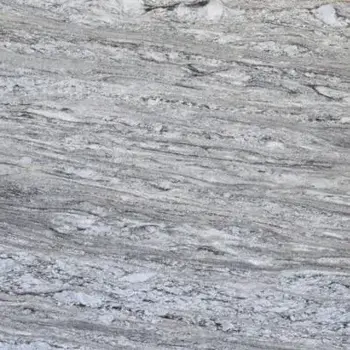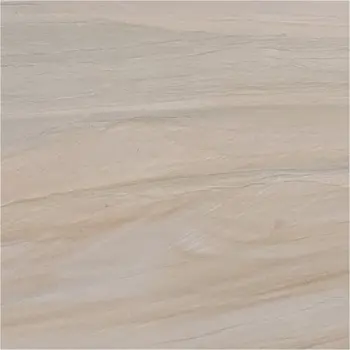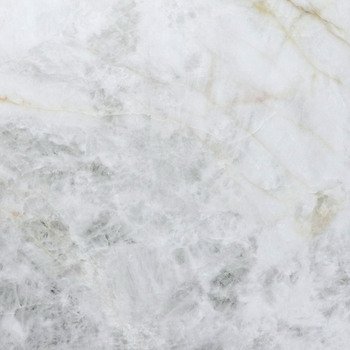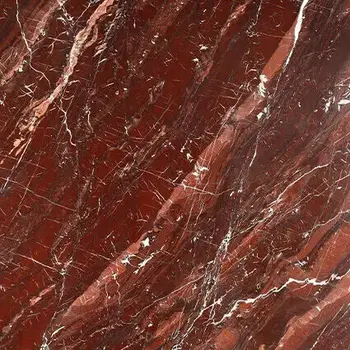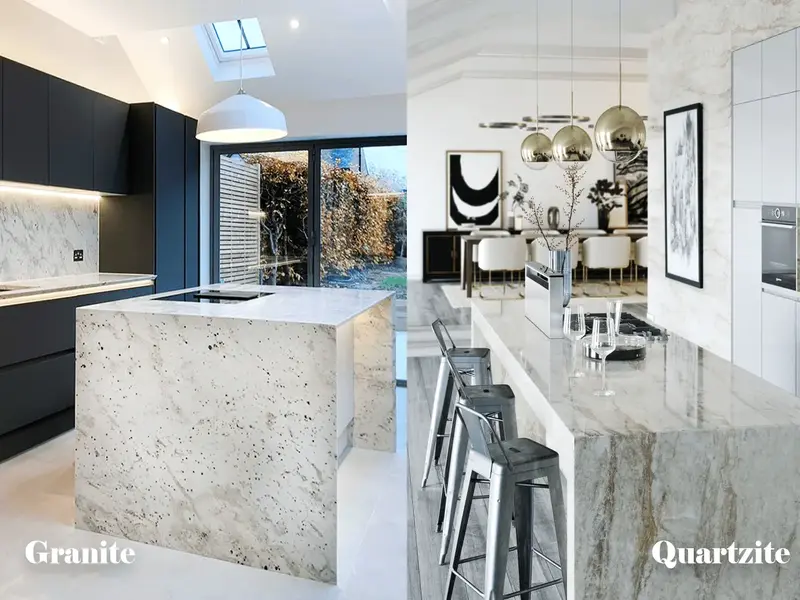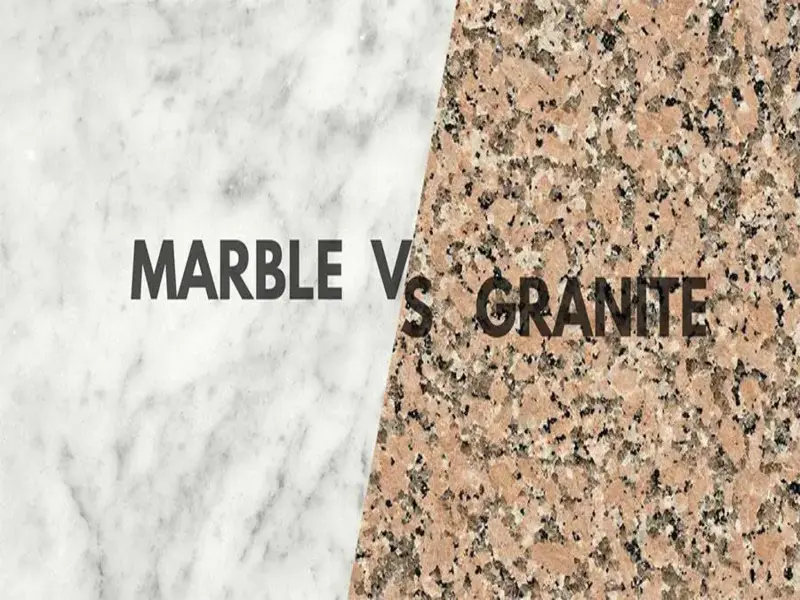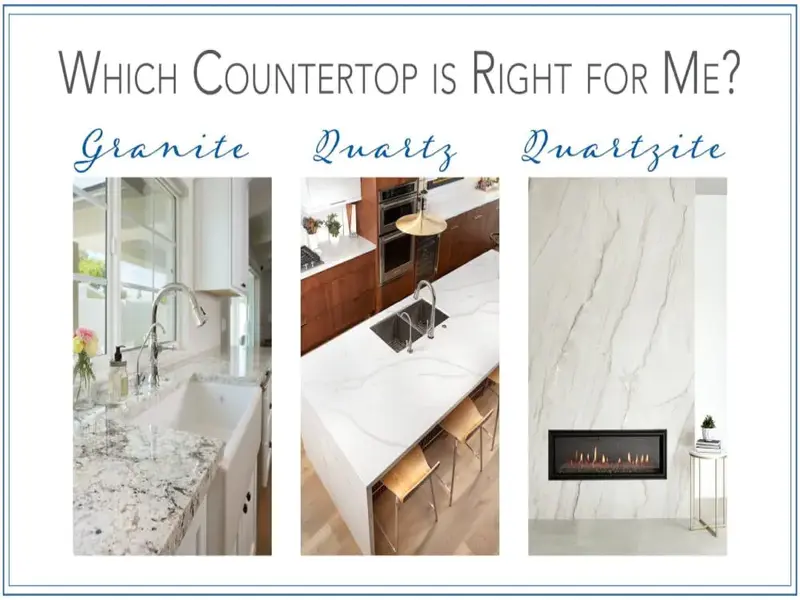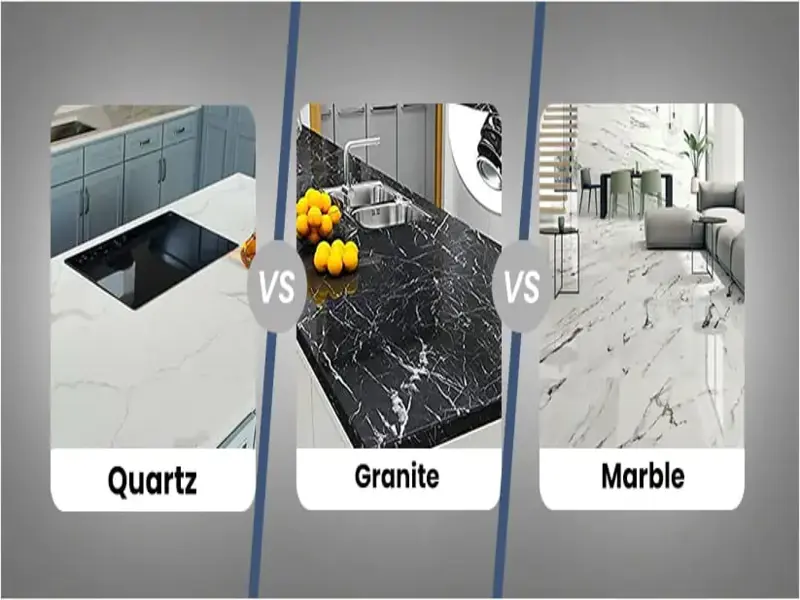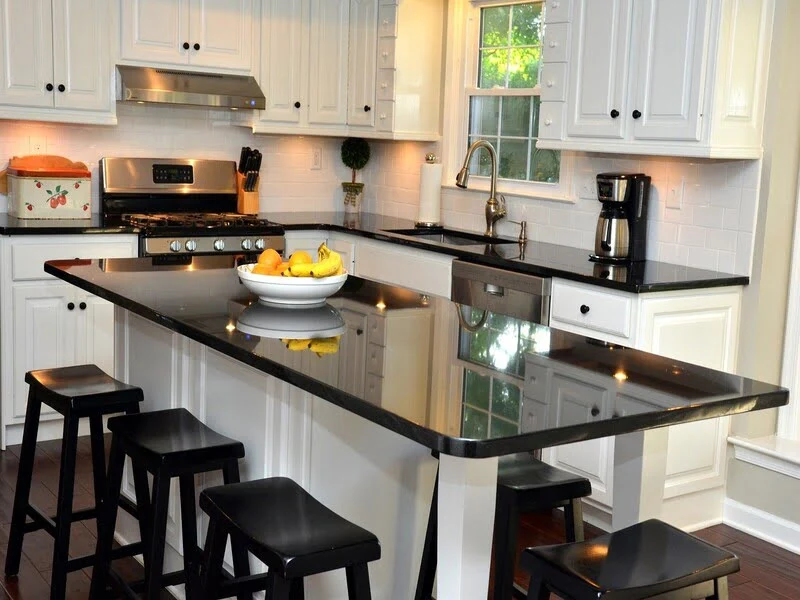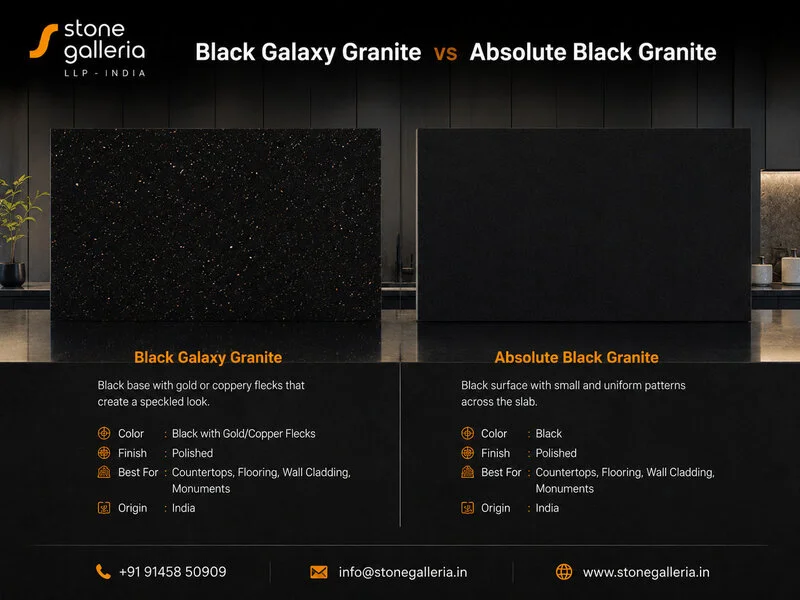
When constructing a structure, there are numerous decisions that must be made before anyone steps inside. Before making a decision on a colour palette for walls, wallpaper design, or flooring hue, one must decide whether to use natural stone or engineered stone that also referred as man made stone or composite stones. While natural stones are functional, manufactured stones are convenient. For a unique and heat-resistant surface, use natural stone. Engineered stone offers a perfect colour and design with minimal care and sealing.
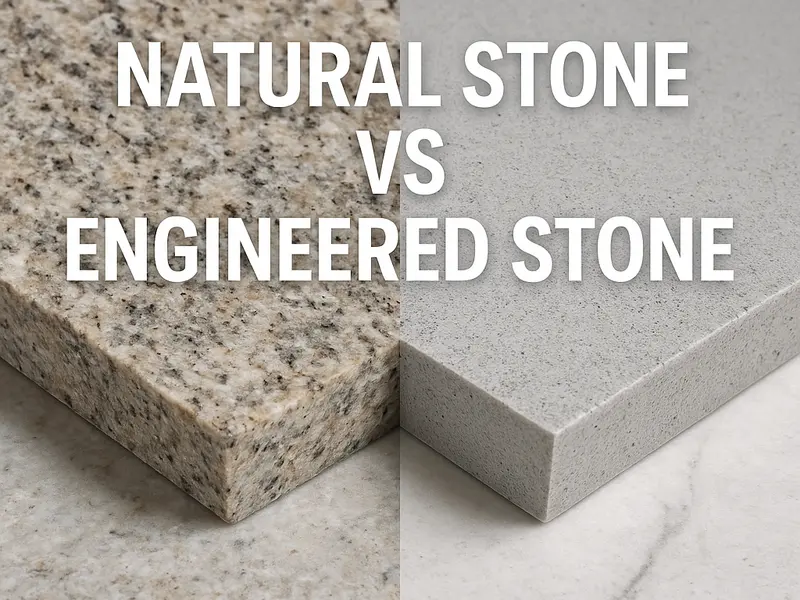
The sources of the two (raw) materials are comparable. Natural stone is a single block that is sawn from a quarry, whereas engineered stone is crushed rock kept together by 6–10% polyester resin. This is the main difference between the two types of stone. Everything downstream is determined by the resin; it makes the slab non-porous and color-consistent, and it causes the surface to fail at about 150 °C and turn yellow when exposed to sunshine. Although natural stone doesn't require a binder to fail, each slab is unique and most require sealing every one to three years. Where the slab goes determines which is more important. The sections that follow compare each over eleven criteria, starting with those that alter the choice.
What Is Natural Stone?
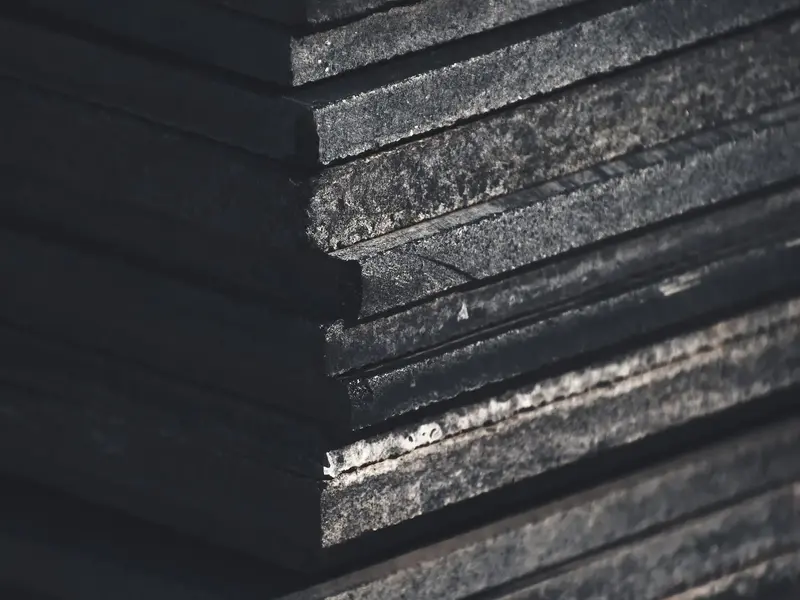
Natural stone is quarried rock that reaches you cut and finished, with nothing added. Two processes stand between the block and the slab: sawing and surfacing. No binder, no pigment, no filler. Everything the material does — how it takes heat, how it absorbs water, how it breaks — was decided by geology, not by factory hence no brand exists except the retailer.
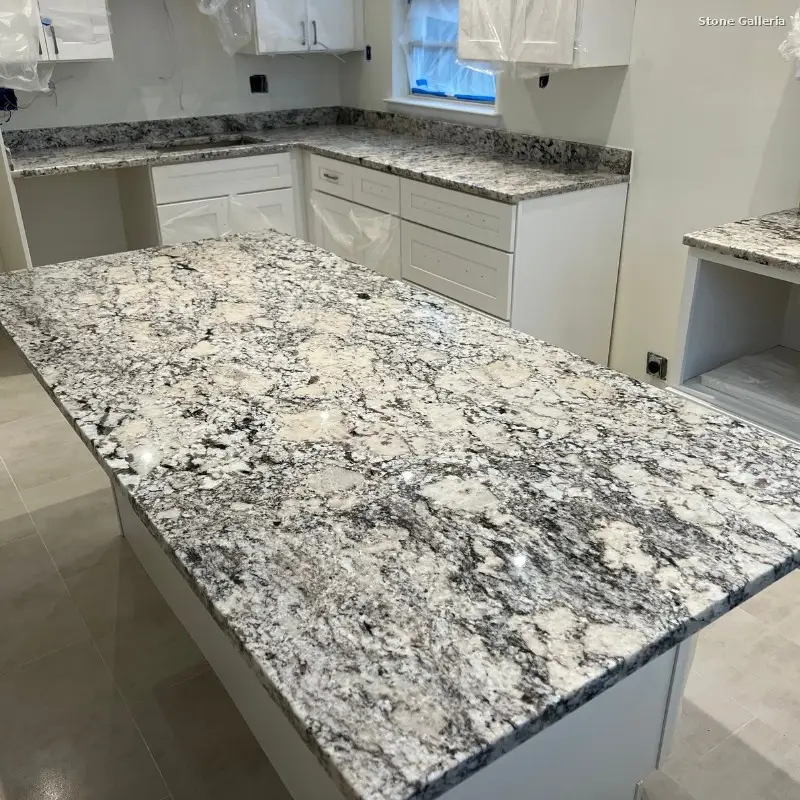
Igneous stone cooled from molten rock. Granite is the one that — an interlocking crystal structure of quartz, feldspar and mica, Mohs 6–7, dense, and stable under direct heat because it formed under conditions no kitchen reproduces. Basalt and gabbro belong here too, and both are sold as granite.
Metamorphic stone was existing rock recrystallised under heat and pressure. Marble was limestone; it keeps limestone's calcite chemistry, which is why it etches from lemon juice and vinegar regardless of sealing. Quartzite was sandstone; the grains fused into quartz, giving Mohs 7 and marble-like veining without the acid sensitivity. Slate splits along cleavage planes, which is what makes it a roofing and paving material.
Sedimentary stone was laid down in layers and compacted. Sandstone, limestone and travertine sit here — more porous than the other two families, which is why they're specified for cladding, paving and elevation work far more often than for kitchen counters.
| Type | What it is | Mohs | Water absorption | Typical use |
|---|---|---|---|---|
| Granite | Interlocking quartz, feldspar and mica, cooled from magma | 6–7 | 0.1–0.4% [ASTM C615 caps at 0.40%] | Counters, flooring, cladding, paving |
| Quartzite | Sandstone whose grains fused into quartz under heat and pressure | 7 | Under 0.5% | Counters, flooring, wet areas |
| Marble | Recrystallised limestone — calcite chemistry retained | 3–5 | Up to 0.2% [ASTM C503] | Vanities, flooring, cladding, feature walls |
| Sandstone | Quartz grains held by natural silica, iron oxide or clay cement | 6–7 grain, softer as rock | 1–8% by class | Elevation, cladding, paving, landscaping |
| Limestone | Calcite, often with fossil content | 3–4 | 2–12% by density class [ASTM C568] | Cladding, flooring, paving |
| Travertine | Limestone formed at springs, with natural voids, usually filled | 3–4 | High — voids drive it | Flooring, cladding, pool surrounds |
| Slate | Shale metamorphosed into cleavable sheets of mica, chlorite, quartz | 2.5–4 | Under 0.5% [ASTM C629] | Roofing, paving, flooring, cladding |
Now lets have a look at some engineered options.
What engineered stone (composite stone) is?
Engineered stone is any slab made by crushing mineral material and binding it with resin, then curing it under heat and pressure. The stone is real; the slab is not. That single fact — a polymer binder holding mineral particles together.
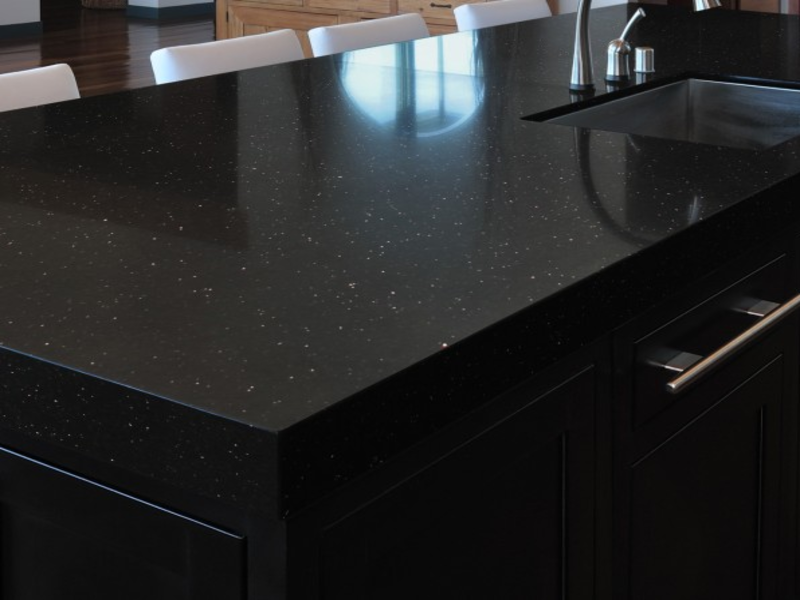
Engineered quartz is the one most popular and often called as engineered stone. Crushed quartz at 90–94%, polymer resin and pigment for the rest 6 - 10%. Sold as Caesarstone, Silestone, Cambria and dozens of other brands. Brands differ on colour range, design, resin formulation and warranty terms — not on what the material is.
Engineered marble, also called agglomerate or agglo, uses crushed marble instead of quartz with a polyester binder. Cheaper than quartz, softer, and more common in cladding and vanity tops than kitchen counters.
Solid surface — Corian and similar — is acrylic or polyester resin with a mineral filler. It has more resin and less stone than quartz, which is why it can be sanded and repaired but scratches more easily.
Terrazzo, in its resin-bound form, sets marble or glass chips in a polymer matrix. Cement-bound terrazzo is a different material and falls outside the definition.
Granite, marble and quartzite behave differently on heat, staining and edge strength — the comparison below covers granite, but the choice within natural stone matters just as much. Tell us the application and we'll tell you which stone holds up.
Ask About Your ApplicationThese slabs are manufactured in a factory and the thickness, colour and finish remain constant from one slab to the next, making it easy to match one slab to another on a large project. Its drawback is also the resin material: it is less heat resistant than natural stone which means that hot pans require a stand and can become discoloured or fade when exposed to direct sunlight for extended periods of time.
The line the category draws isn't natural versus synthetic. The quartz in an engineered slab is mined; nothing about it is made in a laboratory. The line is cut versus composed. Australia's regulations put it precisely: an artificial product containing at least 1% crystalline silica, created by combining natural stone materials with other constituents such as water, resins or pigments, and hardened. Combining and hardening are the operative words.
Sintered stone and porcelain slabs — Dekton, Neolith, Laminam — get grouped with engineered stone in most shops, but they belong in their own category. Mineral powders are fused under heat and pressure with no resin at all.
| Type | What's in it | Binder | Mohs | Typical use |
|---|---|---|---|---|
| Engineered quartz | ~90–94% crushed quartz | 6–10% polyester resin | 7 | Indoor counters, vanities |
| Engineered marble | Crushed calcite / marble waste | Polyester resin | 3 | Wall cladding, low-traffic vertical |
| Sintered stone (Dekton, Neolith) | Clay, feldspar, silica | None — fused under heat and pressure | 6–7 | Counters, façades, outdoor |
| Porcelain slab | Clay body, glazed or full-body | None — fired | 6–7 | Cladding, flooring, counters |
| Terrazzo / agglomerate | Marble or glass chips | Cement or resin | 3–5 | Flooring, precast |
Also READ | The Reason for Material Selection: Engineered Stone Vs Natural Stone
Natural Stone vs Man-Made Stone: Side by Side Comparison
| Natural stone | Engineered stone | |
|---|---|---|
| What it is | One quarry block, sawn and surfaced | Crushed mineral, resin, pigment, pressed and cured |
| Range covered | Granite, marble, quartzite, sandstone, limestone, travertine, slate | Engineered quartz, agglomerate marble, solid surface, resin terrazzo |
| Pattern | Unrepeatable. Every slab differs | Designed and consistent slab to slab |
| Colour range | Whatever geology produced | Anything, including colours no stone occurs in |
| Direct heat | Handles hot cookware. No binder to fail | Resin fails first. Quartz discolours near 150°C, solid surface lower |
| UV / outdoor | Stable. Used for facades, paving, outdoor kitchens | Resin yellows under sustained UV. Outdoor use voids every major warranty |
| Sealing | Depends on the stone. Some need it yearly, some never | Never. Non-porous by manufacture |
| Repairability | Chips fill; the surface can be repolished | Chips fill; scorch and thermal cracks cannot be repaired. Solid surface is the exception — it sands out |
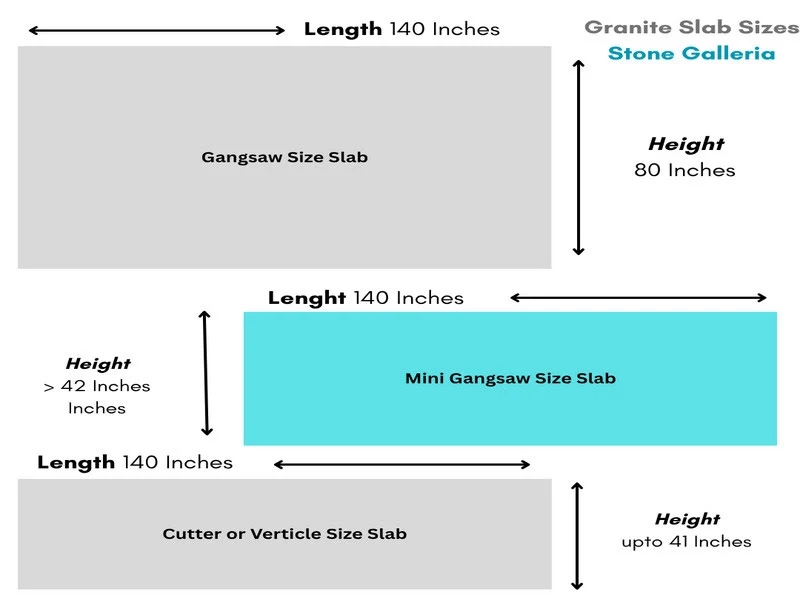
| Slab size | Limited by the block. Gangsaw slabs to roughly 3200 × 1900 mm | Limited by the press. Roughly 3050 × 1400 mm |
| Silica dust in fabrication | Present, controlled with wet cutting | Higher concentration. Banned in Australia since 2024 |
Quartz vs quartzite
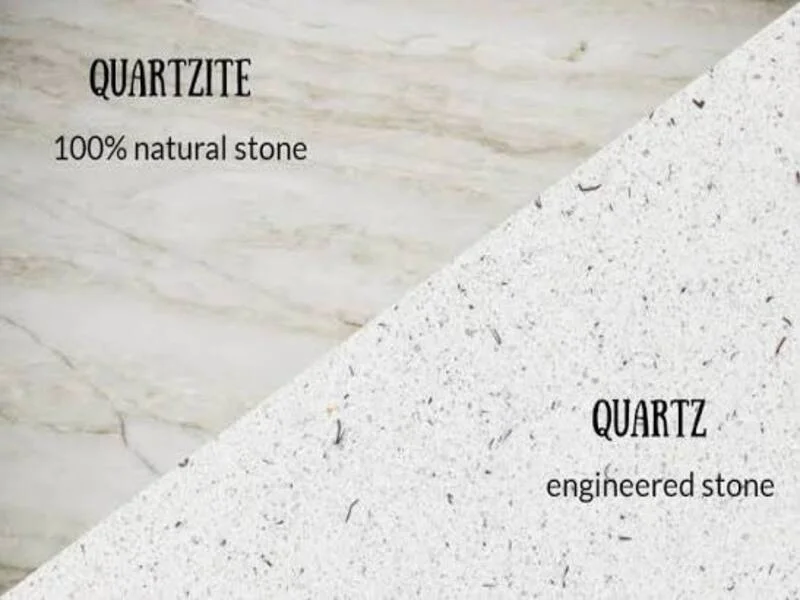
Quartz vs quartzite, very interesting! Many people believe that quartz and quartzite are interchangeable, and this is most likely a misprint. Well! It's not. These are two separate materials: quartz, which is manufactured in a factory, and quartzite, which is a completely natural stone that is processed in a factory. Both get their names from the same material, and quartzite slabs frequently have marble-like veining similar to what quartz manufacturers print. However, the mineral is where the similarities end.
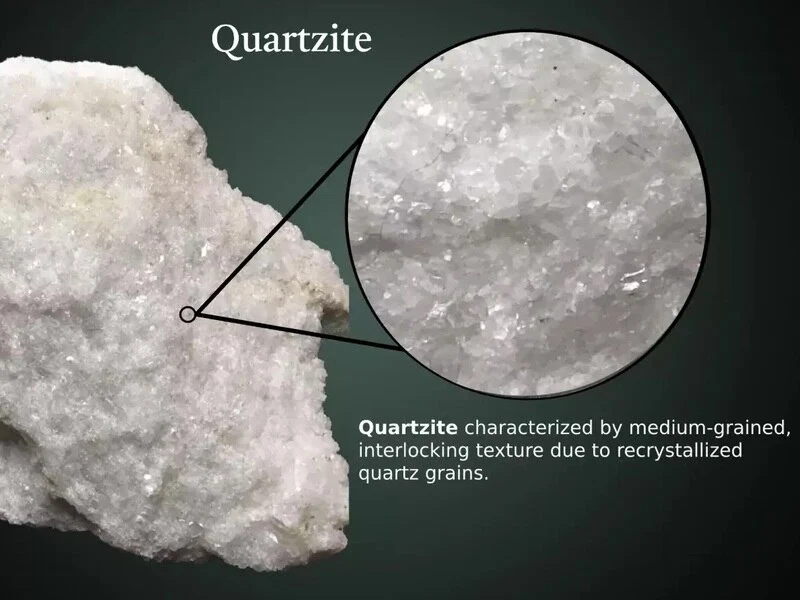
Quartzite started as sandstone. Heat and pressure fused the grains into an interlocking quartz structure, resulting in Mohs 7 and no calcite — unlike marble, it does not etch with lemon juice or vinegar. It can withstand direct heat in the same way that any natural stone does.
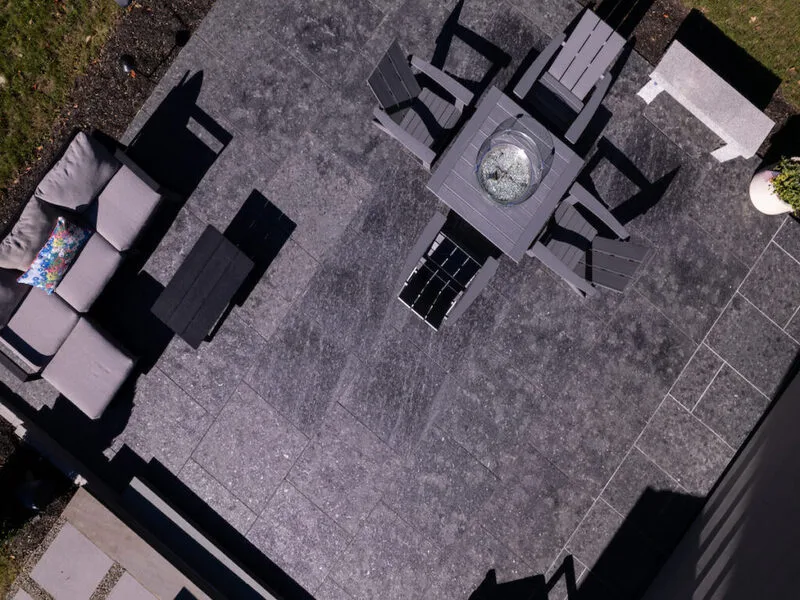
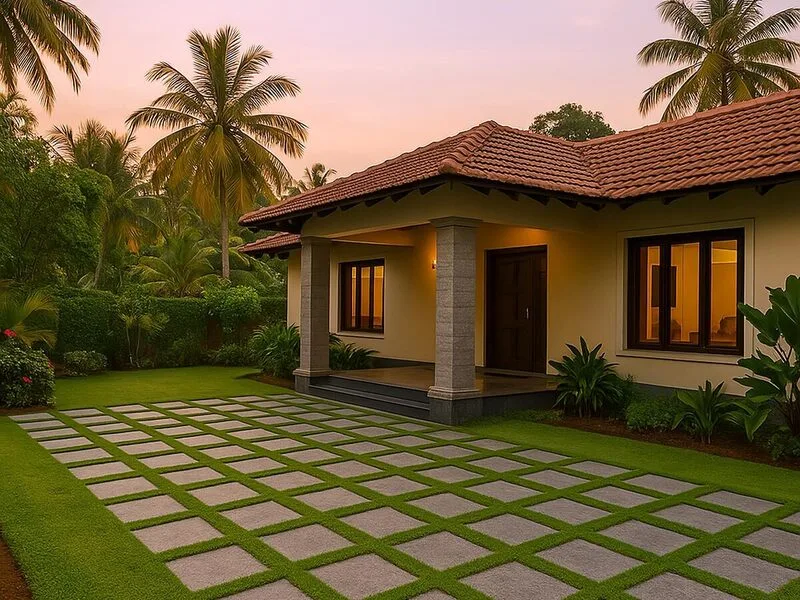
Engineered quartz fades under UV and most warranties exclude outdoor use, so facades, paving, pool surrounds and outdoor kitchens are natural stone by default. Granite, sandstone and quartzite handle direct sun, rain and heat without a coating.
Discuss an Outdoor ProjectEngineered quartz has a Mohs hardness of 7, yet this number is misleading. The resin that holds the quartz crystals together isn't as hard as the quartz crystals themselves, and the resin is the first to break under heat, UV light, and solvents. It is non-porous, therefore it never needs to be sealed.
ALSO READ | Full Guide: Quartzite vs Quartz – Cost, Durability, Use Cases
Granite vs Quartz: What's the Difference?
Both are good day by day, but they disagree as to where the failing is:
| Bulk Water | Granite (Natural - Factory Processed) | Engineered Quartz (Factory Manufactured) |
| Hardness (Mohs) | 6–7 | 7 |
| Heat resistant | Can be put directly into hot cookware without harming it | Becomes damaged at temperatures of approximately 150°C (300°F) |
| Porosity | Porous, needs sealing, reseal every 1-2 years depending on stone | Non-porous, no sealing needed. |
| Pattern | Unique per slab | Controlled, repeatable |
| Chip risk: | Can chip on edges under impact: | More impact-resistant |
The row of heat resistance is more important if your oven is hot off the stove consistently. The porosity row does if you're more concerned about stains and spills.
ALSO READ | Full Comparison between Granite and Quartz
Is Engineered Stone cheaper than Natural Stone?
Will depend on the type of stone being used. Because of the standardisation in the manufacturing process, engineered quartz is engineered to be installed between $50 and $120 per square foot on average. The price of natural stone ranges from $50 to $200+ per sq ft, with popular granite being a cheaper option than rare and imported stone such as exotic marble or a unique pattern granite.Granite is also heavier and more brittle than engineered granite slabs, so it may add to installation costs due to greater time required for the granite to be transported and installed. Engineered granite slabs are generally uniform in thickness and size, making them easier to cut and install. Consider the additional expense as well: Natural stone requires re-sealing every year (granite needs it more often; softer options like marble will require more re-sealing) while engineered stone requires no sealing, except in case of a scorch or crack from heat, which needs to be fixed by a professional, not a reseal.
How much maintenance does each one require?
Granite requires sealing every 1-2 years; marble more frequently because it is more porous and softer. While waiting for resealing, use a neutral cleaner; acidic or abrasive ones can dull the sealant or etch calcite stones such as marble. Spills should be cleaned quickly, particularly on lighter granites, the oil and wine. Engineered stone does not seal at all. Soap and water or mild household cleaners are usually used, and the primary concern is to avoid harsh solvents which can cause the resin binder to weather over time, and hot objects should not be placed on it. That difference is often enough to make the decision when no one wants to keep track of a resealing schedule in the busy kitchen.
Also READ: Original Environmentally Conscious Green Building Material. Is Granite Sustainable?
Is quartz engineered stone?
Yes, in the case of countertops, "quartz" is a synonym for engineered stone. Quartz slabs are called engineered stone because the slab is manufactured, not quarried. The quartz is mined; nothing about it is synthetic. But a quarried slab is one piece of rock cut from one block, and a quartz slab is crushed mineral from multiple sources, blended to a target colour, mixed with polymer resin and pigment, then vibro-compacted under vacuum and cured with heat. The material going in is natural. The slab coming out is a product with a formulation.
That's the line the category actually draws — not natural versus synthetic, but cut versus composed.
Is engineered stone banned anywhere?
Yes. Australia banned the manufacture, supply, processing and installation of engineered stone from 1 July 2024, and banned imports of engineered stone benchtops, slabs and panels from 1 January 2025. Australia's work health and safety ministers took the decision in December 2023, after silicosis cases rose sharply among workers who cut and polish engineered stone.
The reason is silica dust. Engineered quartz is 90–94% crushed quartz, so cutting, grinding and polishing a slab releases respirable crystalline silica. Natural stone carries silica too, but engineered quartz concentrates it, and the fabrication shops working it every day took the exposure.
If you already have quartz installed, this does not affect you. Safe Work Australia's position is that installed engineered stone poses no safety risk in the home as long as it isn't cut or drilled into. The hazard sits in the fabrication shop, not the kitchen. Repairs, modifications and removal are the jobs that need a licensed operator with dust control.
Which Should You Choose?
You want a one-of-a-kind pattern, frequently set hot cookware on the surface, if you are creating an outdoor kitchen (most warranties don't cover outdoors use, despite the fact that engineered quartz can fade from UV exposure), or the project is an area of light use, such as a bathroom vanity where marble's softness is not a problem.
Consider engineered stone when: You don't care about sealing, the kitchen or bathroom is a very busy space with lots of spills, you want to create a pattern over a large space, or you're installing in a commercial space where uniform slabs make installation and repairs easier.
Mix both if you want a natural stone island or feature wall with engineered quartz on the work counters which is often the case in kitchens where you need a focal point and a maintenance-free work surface, or in hotels, where you want a natural stone wall in the lobby, with engineered surfaces in guest bathrooms.
Natural stone (granite, sandstone, marble, quartzite and slate) manufacturing and exporting company, Stone Galleria in Rajasthan, is a supplier of natural stone only; if you're looking for engineered quartz, we recommend you consult with a quartz specialist instead.
Conclusion
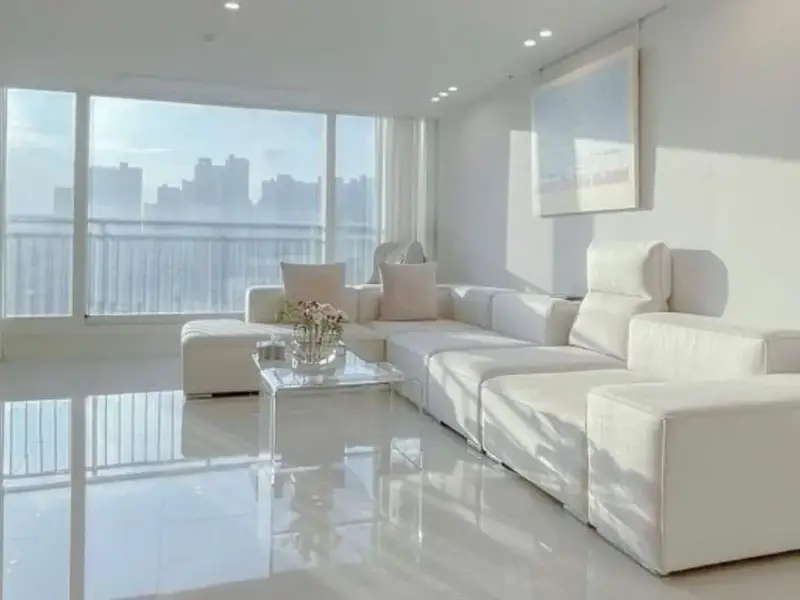
Choose natural stone for outdoor kitchens, window sills, façades, fireplace surrounds, and any counter where hot cookware goes down directly — the resin in engineered stone fails at all four. Choose engineered quartz for indoor kitchens and commercial washrooms where you want every slab to match and no sealing schedule. Choose neither in engineered marble form for a worktop: at Mohs 3 it etches from lemon juice.