
 Vérifié
Many prefer natural stones for various applications due to their appealing aesthetics, long-lasting qualities, natural origin, and cost-effectiveness. The wide range of colours provided by nature is one of the reasons for their popularity. It is worth mentioning that the choice has increased substantially over the years, thanks to advancements in extraction technologies and the introduction of a resining process for slabs. One such technique of post-extraction technology is block vacuuming and the other is slab resining during the processing.
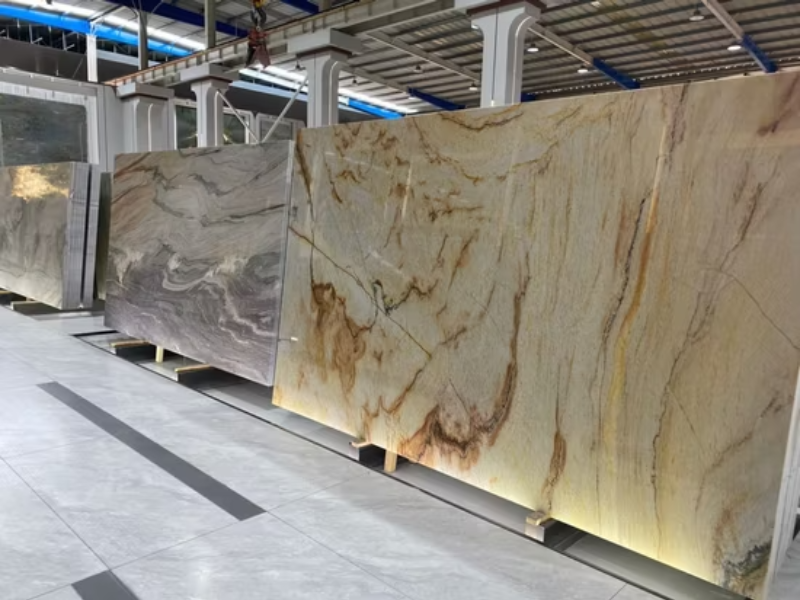
READ | Natural Stone Block Reinforcement Through Block Vacuuming Technique
With an unwavering commitment to keeping our visitors informed. Our goal is to offer valuable insights into the world of Indian granites, covering everything from sourcing to application. Today, we will explore the process of epoxy resining of natural stones such as marble, quartzite, and granite slabs.
Now let’s address the initial question:
What Is Natural Stone Slab Resining?
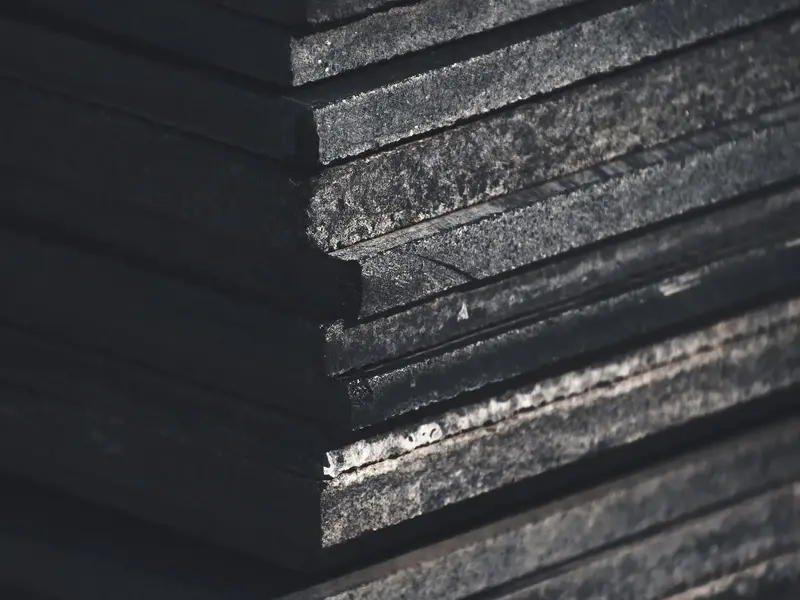
The stone industry commonly applies the term “slab resining” to describe the process of treating or impregnating natural stone slabs, such as granite, marble, and quartzite, with resin. Resining is a widely employed technique, especially for granite and various natural stones.
Clear or transparent epoxy resin finds common usage in preserving the innate beauty of stone, particularly when used to fill voids or repair cracks.
In the past, the industry utilized polyester resin for filling natural stones. However, there is now a newer technology that involves applying epoxy resin.
Why Is Resin Applied to Natural Stone Slabs?
Resining slabs serves multiple purposes, with the main objective being to improve the durability, strength, and overall aesthetic of the surface.
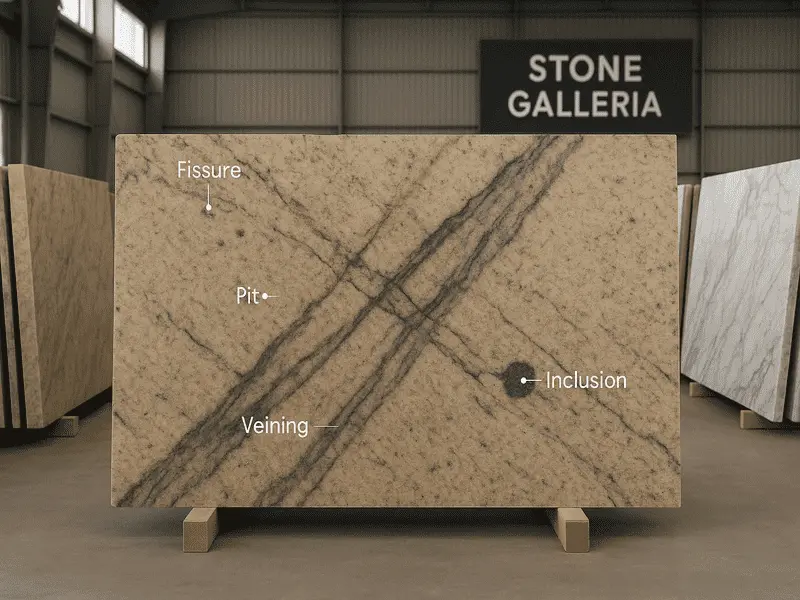
The slab resining process enables manufacturers to salvage slabs that would have otherwise been rejected on account of their brittleness, fragility, or the presence of numerous natural pits and fissures; this results in a substantial waste reduction. This, in turn, leads to cost savings in the overall manufacturing process. This not only helps improve the economic efficiency of the production line but also promotes sustainable practices by reducing material waste.
How Is Exposy Resin Applied To Natural Stone Slab?
Several methods are used depending on the level of treatment needed for natural stone slabs.
Traditional Method
The process includes combining the resin and hardener, spreading the mixture onto the stone slab, and letting it dry naturally in the sunlight. After drying, the polishing lines meticulously process the slabs to achieve the desired smooth and polished finish. Before meticulously preparing each slab for shipment, we conduct a thorough quality check on it.
This method is very cost-effective as it only involves applying epoxy resin with a roller brush. However, this method may not be suitable for complicated or high-value stone slabs like Alaska granite, marbles and quartzites.
Vacuuming & Microwave Resin System
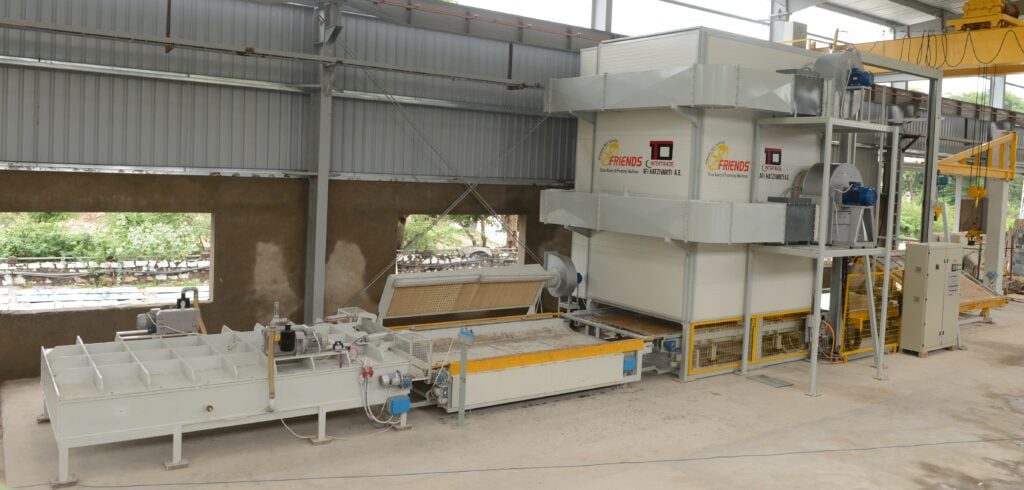
The process begins by combining the resin and hardener and then evenly spreading the mixture onto the stone slab. Afterwards, we carefully position the slab on a vacuum bed. Using vacuum suction, we draw the resin into the slab, ensuring a thorough application and leaving no unwanted resin on the surface.
Following the completion of vacuuming, we transfer the slabs to microwaves. These microwaves produce electromagnetic waves, which quickly heat the resin. This heating process is highly effective in enhancing the penetration into the cracks that exist in the stone slabs.
This heating process aims to expedite the curing of the resin, presenting a quicker and more effective option compared to traditional methods. Microwaves offer controlled and rapid heating, resulting in consistent curing outcomes.
These steps are repeated as needed until the desired result and quality are achieved.
Stone Reinforcement Mesh
In this process, manufacturers commonly apply fibreglass reinforcement mesh on the back of slabs to provide robust structural support, enhancing overall durability by evenly distributing stress across the slab. As a result, it significantly reduces the chances of breakage during transportation and handling of material, especially in the case of large or thin slabs. In addition, the reinforcement mesh helps prevent warping and provides support to the slab throughout its lifespan, making it a valuable addition for applications that require increased strength.
Final Step – Polishing
The slabs are grinded and polished using a fully automatic 18 18-head polishing machine. Every slab undergoes a thorough inspection by experienced technicians who possess extensive knowledge and expertise, enabling them to detect even the smallest imperfections.
Stone Galleria
We offer more than just materials – we provide a partnership founded on reliability and responsiveness. Stone Galleria recognizes the distinctive requirements of commercial enterprises and is committed to delivering dependable and cost-effective supply chain management.
As a leading manufacturer, supplier, and exporter of Granite, Sandstone, and Quartzite, we tailor our products to your specifications, including dimensions, thickness, and various finishes.
Embark on the journey to enhance your operations by requesting a free quote today. Complete our inquiry form, and we will promptly respond to your needs.
Knowledgeable – Reliable – Responsive